
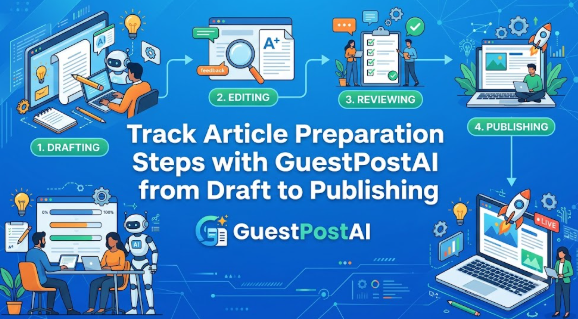
Introduction
In the evolving landscape of digital marketing, guest posting remains one of the most effective strategies for expanding audience reach, establishing domain authority, and building meaningful industry connections. By contributing high-quality content to reputable external platforms, businesses and content creators can introduce their brand to new audiences and build long-term credibility.
However, running a successful guest posting strategy is often far more complex than it appears on the surface. Marketers, agencies, and individual creators frequently face significant operational hurdles. Managing manual outreach, coordinating content creation with multiple freelancers, organizing editorial schedules, designing custom visual assets, and tracking publication dates across various spreadsheets can quickly become an overwhelming process. As a campaign expands, these disjointed manual steps often lead to project delays, inconsistent editorial quality, and administrative burnout.
To solve these growing operational challenges, modern marketing teams are increasingly moving away from fragmented tools and adopting centralized, AI-driven platforms. Rather than relying on separate software for drafting, image creation, outreach, and project management, teams are looking for unified systems that bring every phase of the publishing lifecycle together.
This is where GuestPostAI enters the equation. Designed as an end-to-end publishing solution, GuestPostAI provides a structured environment that integrates content generation, custom visual creation, platform discovery, scheduling, and campaign tracking into a single ecosystem. This guide explores how GuestPostAI works, the operational problems it solves, and how different organizations can leverage its capabilities to streamline their guest blogging efforts.
What is GuestPostAI?
GuestPostAI is a comprehensive AI guest posting platform engineered to streamline and centralize the entire guest blogging process. At its core, the platform was developed to address the fragmentation that typically plagues digital outreach. Instead of forcing content creators and marketers to jump between word processors, design software, email clients, and project management boards, GuestPostAI unifies these distinct functions within one interface.
The vision behind GuestPostAI is to make guest publishing accessible, organized, and scalable for users of all technical skill levels. By bringing together AI-assisted writing, custom visual design, publisher marketplaces, and campaign monitoring, the platform bridges the gap between content creation and publication.
For content buyers, agencies, and brands, it serves as a command center to organize campaigns, draft tailored articles using an AI guest post generator, select suitable publishing venues, and track progress. For website owners and publishers, it offers a structured system to manage incoming publishing requests, review content drafts, and maintain editorial standards. By serving both sides of the publishing equation, GuestPostAI reduces friction across the entire content lifecycle.
Why Traditional Guest Posting Can Be Time-Consuming
To appreciate the efficiency gains offered by modern platforms, it helps to analyze the traditional guest posting process. Manually managing a campaign involves numerous moving parts, each carrying potential bottlenecks:
- Manual Website Discovery: Finding relevant sites requires hours of manual web searches, evaluating domain metrics, and filtering out inactive or low-quality blogs.
- Siloed Content Creation: Writing articles from scratch or hiring multiple freelance writers often leads to inconsistent tone, prolonged turnaround times, and back-and-forth editing cycles.
- Visual Asset Design: Sourcing or creating relevant featured images requires graphic design skills or extra subscriptions, often delaying publication.
- Manual Outreach & Follow-Ups: Sending cold emails to prospective publishers frequently results in low response rates and misplaced conversation threads.
- Spreadsheet Management: Tracking pitch statuses, publication dates, live links, and payment records across complex spreadsheets is prone to human error and data loss.
- Inconsistent Formatting: Adjusting articles manually to fit varying publisher guidelines drains time and increases administrative overhead.
When scaled across dozens of monthly campaigns, these manual steps consume disproportionate amounts of time and energy, shifting the focus away from strategy and creative quality. Moving to a centralized workflow removes these repetitive administrative tasks.
Why AI is Changing Guest Posting Workflows
Artificial intelligence has transformed how digital content is researched, drafted, and organized. When applied to guest posting workflows, AI does not replace human strategic oversight; rather, it amplifies productivity and consistency.
Key ways AI improves the outreach workflow include:
- Accelerated Research and Drafting: AI tools quickly outline and draft structured articles, saving hours of initial composition time while maintaining proper stylistic tone.
- Editorial Consistency: Reusable AI prompts and templates help maintain consistent structure, subheadings, and stylistic guidelines across large volumes of content.
- Integrated Asset Creation: AI image generation instantly creates relevant visual assets matched to the text, removing the need for third-party design tools.
- Structured Organization: AI helps categorize topics, match content to appropriate niches, and format articles according to specific publisher standards.
- Reduced Operational Friction: By automating repetitive drafting and formatting tasks, marketing teams can focus on strategic relationship-building and higher-level content strategy.
Who Should Use GuestPostAI?
GuestPostAI is built to adapt to diverse publishing goals and team structures. Below is a breakdown of how various users leverage the platform:
Bloggers
- Challenges: Managing content creation alongside outreach leaves little time for deep research or site management.
- How GuestPostAI Helps: Accelerates article drafting and image creation, enabling consistent publishing on external sites to grow brand awareness.
- Practical Benefit: Saves hours weekly on drafting and outreach preparation.
SEO Professionals
- Challenges: Coordinating large-scale content publishing while managing quality control across various niches.
- How GuestPostAI Helps: Serves as a reliable SEO guest post generator and management platform, streamlining campaign tracking and publisher selection.
- Practical Benefit: Provides clear visibility into all live and pending campaigns.
Digital Marketing Agencies
- Challenges: Handling multiple client accounts simultaneously with varying brand voices and requirements.
- How GuestPostAI Helps: Offers team access controls, reusable content templates, and consolidated reporting to manage diverse clients within one dashboard.
- Practical Benefit: Increases agency capacity without increasing operational overhead.
Content Writers
- Challenges: Writer’s block, slow drafting speed, and constant manual formatting for different platform requirements.
- How GuestPostAI Helps: Assists with structural outlines, draft generation, and quick formatting adjustments.
- Practical Benefit: Speeds up drafting while maintaining editorial quality.
Content Marketing Teams
- Challenges: Disjointed communication between writers, editors, and outreach specialists.
- How GuestPostAI Helps: Provides a centralized workspace where content generation, asset creation, and scheduling are unified.
- Practical Benefit: Streamlines project handoffs and maintains content quality.
Marketing Managers
- Challenges: Tracking campaign ROI, budget allocation, and publishing schedules across various channels.
- How GuestPostAI Helps: Built-in reporting, order tracking, and status boards offer full visibility into active projects.
- Practical Benefit: Simplifies progress tracking and resource allocation.
Freelancers
- Challenges: Balancing client deliverables, content writing, and personal client acquisition.
- How GuestPostAI Helps: Unifies content creation, image design, and campaign submission into a single workflow.
- Practical Benefit: Enhances service speed and deliverability for clients.
Startups
- Challenges: Limited marketing budgets and small team sizes requiring high efficiency.
- How GuestPostAI Helps: Offers an end-to-end framework to run outreach efforts without hiring large specialized teams.
- Practical Benefit: Maximizes output with minimal resource expenditure.
SaaS Companies
- Challenges: Establishing industry authority through educational content across specialized tech blogs.
- How GuestPostAI Helps: Generates technical content outlines and helps discover industry-relevant publishing platforms.
- Practical Benefit: Builds thought leadership efficiently.
eCommerce Businesses
- Challenges: Reaching broader target markets and showcasing products across consumer and lifestyle sites.
- How GuestPostAI Helps: Assists in crafting educational guides, product roundups, and visual assets tailored for external publishing.
- Practical Benefit: Expands brand visibility across relevant retail blogs.
Small Businesses
- Challenges: Lack of dedicated in-house outreach staff or complex tools.
- How GuestPostAI Helps: Intuitive interface guides users step-by-step from topic creation to final publication request.
- Practical Benefit: Accessible, professional-grade marketing without technical complexity.
Enterprise Marketing Teams
- Challenges: Managing large-scale content operations across regions with strict governance requirements.
- How GuestPostAI Helps: Robust team collaboration tools, role-based permissions, and version tracking ensure brand alignment.
- Practical Benefit: Scale guest posting operations while maintaining brand governance.
PR Agencies
- Challenges: Distributing client announcements and thought leadership pieces efficiently.
- How GuestPostAI Helps: Streamlines article creation, visual asset generation, and platform submission into one pipeline.
- Practical Benefit: Faster execution of PR and media outreach campaigns.
Link Building Specialists
- Challenges: Sourcing reputable sites, managing link placement requests, and tracking status manually.
- How GuestPostAI Helps: Built-in guest post marketplace allows direct discovery, comparison, and tracking of publishing venues.
- Practical Benefit: Eliminates messy spreadsheets and untracked communications.
Brand Managers
- Challenges: Ensuring content published on third-party sites maintains brand tone and quality standards.
- How GuestPostAI Helps: Custom content templates and review workflows ensure all published material meets brand guidelines.
- Practical Benefit: Preserves brand reputation across external sites.
Website Owners & Publishers
- Challenges: Reviewing low-quality guest submissions, managing publication schedules, and communicating with guest authors.
- How GuestPostAI Helps: Connects publishers with structured, well-formatted guest content submissions directly through the platform.
- Practical Benefit: Reduces editorial review friction and organizes publication schedules.
Influencers
- Challenges: Extending reach beyond primary social platforms into industry publications.
- How GuestPostAI Helps: Assists in adapting commentary and insights into structured written articles for external publications.
- Practical Benefit: Enhances cross-platform presence and personal branding.
Educational Institutions
- Challenges: Sharing academic research, educational insights, and institutional news with broader audiences.
- How GuestPostAI Helps: Simplifies drafting educational articles and managing outreach to academic or industry portals.
- Practical Benefit: Broadens the reach of academic research and institutional updates.
Non-Profit Organizations
- Challenges: Raising awareness on key causes with limited dedicated marketing staff.
- How GuestPostAI Helps: Provides simple content generation and discovery tools to publish educational cause-based stories.
- Practical Benefit: Amplifies organizational message affordably.
Growing Businesses
- Challenges: Transitioning from casual marketing efforts to structured, predictable campaign workflows.
- How GuestPostAI Helps: Offers a repeatable framework for content creation, site discovery, and campaign tracking.
- Practical Benefit: Establishes scalable outreach processes early in company growth.
Core Features of GuestPostAI
GuestPostAI integrates several functional modules designed to streamline campaign execution. Below is an overview of its core capabilities:
AI Guest Post Generator
Creates structured, well-researched article drafts based on user inputs. The generator adjusts tone, perspective, and structure to meet targeted publishing requirements.
AI Image Generation
Generates unique, contextually relevant featured images and inline visuals directly within the content editor, eliminating the need for separate graphic software.
AI Content Templates
Provides structured pre-built frameworks for common guest post formats, such as how-to guides, industry analyses, listicles, and case studies.
Prompt-Based Content Creation
Allows users to enter detailed prompts, specific guidelines, target keywords, and structural constraints to guide the AI during generation.
Content Editing
Features a full-featured text editor where users can refine drafts, polish phrasing, add custom links, adjust formatting, and format headings.
Draft Management
Organizes all content drafts in a single workspace, allowing users to label, search, edit, and organize articles by client, topic, or status.
Content Preview
Provides realistic previews of how articles and visual assets will appear when published on target websites.
Guest Post Marketplace
A centralized guest blogging marketplace connecting buyers with publishers, simplifying venue selection without endless cold outreach.
Website Search
Enables fast queries to search for available publishing sites based on keywords, niches, and key platform attributes.
Website Filtering
Allows users to filter potential publishing sites by category, domain relevance, language, and posting requirements to find the best fit.
Website Categories
Organizes publishing sites into intuitive categories—such as Technology, Business, Lifestyle, Health, and Finance—for targeted outreach.
Website Comparison
Enables side-by-side evaluation of multiple potential platforms to assess their audience alignment, posting rules, and metrics.
Website Selection
Allows users to easily choose target sites and add them directly to active campaign pipelines.
Publishing Requests
Simplifies the submission process by allowing users to send completed drafts and assets directly to target publishers with a single action.
Instant Publishing
Facilitates immediate content transmission and publication on participating networks upon approval.
Scheduled Publishing
Allows marketers to plan content releases in advance by utilizing built-in guest post scheduling tool capabilities.
Publishing Calendar
Visualizes upcoming, pending, and completed publications in a clear calendar view, preventing publishing overlaps.
Campaign Management
Comprehensive guest post management software modules to run multi-site campaigns, categorize efforts by client, and track completion timelines.
Guest Post Project Management
Assigns tasks, deadlines, and responsibilities across team members involved in content creation, editing, and outreach.
Website Management
Enables publishers to list their platforms, manage site guidelines, and control incoming submission preferences easily.
Publisher Management
Allows agencies and buyers to maintain list records of preferred publishers, editorial contacts, and historic platform performance.
Role-Based Access
Ensures secure platform usage by setting permissions for writers, editors, managers, clients, and publishers.
Content Version Management
Tracks edits and revisions across content drafts, allowing teams to review changes or restore previous versions if necessary.
Payment Management
Centralizes transaction records, invoices, and billing history for paid publishing placements within one platform.
Order Tracking
Monitors the real-time status of submitted articles—from pending review to approved, scheduled, or live status.
Activity History
Maintains a detailed audit log of all actions taken within a campaign, providing complete transparency for team leaders.
Team Collaboration
Enables internal messaging, line-item commenting, and task handoffs directly within the content dashboard.
Workflow Management
Structures tasks into logical stages (e.g., Draft -> Edit -> Approved -> Submitted -> Published) to ensure seamless operational flow.
Reusable Templates
Saves customized prompts, editorial guidelines, and article layouts for repeated use across future campaigns.
Editorial Control
Ensures that all generated drafts pass through mandatory human review steps prior to platform submission.
Reporting & Campaign Monitoring
Provides visual summaries, campaign metrics, and status reports to measure overall outreach efficiency.
Step-by-Step Guide to Using GuestPostAI
Using GuestPostAI involves an intuitive, step-by-step process that leads users from initial topic selection to published content:
- Step 1 – Choose a Guest Post Topic: Define the central topic, target keywords, and core focus of the article based on your campaign goals.
- Step 2 – Generate AI Content: Input topic details and tone requirements into the AI guest post generator to create an initial structured draft.
- Step 3 – Review and Edit the Article: Polish the generated text, review readability, add custom insights, and adjust formatting within the built-in editor.
- Step 4 – Generate a Featured Image: Use the integrated image generator to create a visually appealing featured graphic tailored to the content topic.
- Step 5 – Select a Reusable Template: Apply pre-formatted layouts or saved style guides to ensure content matches standard editorial standards.
- Step 6 – Search for Suitable Publishing Websites: Explore the guest post marketplace for publishers to identify relevant, active blogs in your niche.
- Step 7 – Compare Available Websites: Evaluate candidate platforms using built-in filtering tools to ensure audience relevance and guideline alignment.
- Step 8 – Select a Publisher: Choose the platform that best aligns with your campaign goals and audience requirements.
- Step 9 – Submit the Publication Request: Send the finished draft, featured image, and placement details directly through the platform.
- Step 10 – Choose Immediate or Scheduled Publishing: Select whether the post should go live immediately upon publisher approval or be set for a future date using the guest post scheduling tool.
- Step 11 – Complete Payment: Process platform placement fees seamlessly using the integrated payment system where applicable.
- Step 12 – Track Campaign Progress: Monitor order status, editorial review progress, and final live link delivery through the tracking dashboard.
How Different Teams Can Collaborate Using GuestPostAI
Centralized platforms excel at breaking down silos between distinct roles in a marketing organization. Here is how GuestPostAI supports cross-team collaboration:
- SEO Team: Identifies strategic topic angles and target keyword groups, embedding these briefs directly into the project workspace for content creation.
- Content Team: Uses AI generation tools to rapidly draft articles, refine messaging, and format content according to client guidelines.
- Editors: Review draft content, ensure brand voice consistency, check factual accuracy, and approve visual assets.
- Outreach & Campaign Managers: Select suitable target platforms from the marketplace, submit approved drafts, and manage scheduling calendars.
- Publishers: Receive clean, well-formatted submissions through a organized portal, simplifying review and approval decisions.
By housing all these activities under a single platform, organizations eliminate messy email threads and lost assets, leading to faster campaign execution.
How GuestPostAI Supports Different Marketing Goals
Different organizations utilize guest posting to achieve varied strategic objectives. GuestPostAI supports these goals through flexible features:
Content Marketing
Allows content teams to repurpose insights and expand their reach across external publications, driving brand visibility.
Thought Leadership
Helps executives and subject matter experts publish educational articles and commentary across respected industry portals.
Brand Awareness
Enables companies to reach non-overlapping target audiences by systematically publishing content across relevant niche websites.
SEO Campaigns
Facilitates organized publishing routines that support search engine optimization strategies through contextually relevant content.
Link Building
Simplifies finding, managing, and placing authoritative contextual links via structured publishing relationships.
PR Campaigns
Speeds up the distribution of company announcements, product launches, and media commentary across external publications.
Product Launch Campaigns
Allows marketing teams to schedule synchronized articles across multiple industry blogs to coincide with new product releases.
Educational Content Distribution
Helps non-profits, academic bodies, and technical companies publish instructional guides to educate target markets.
Authority Building
Establishes a steady presence for brand spokespeople across multiple industry blogs, bolstering digital credibility.
Real Business Use Cases
Below are practical scenarios showing how different entities utilize centralized workflows to solve common outreach challenges:
Use Case 1: The Independent Blogger
- Challenge: A solitary blogger wants to contribute articles to other niche sites but spends too much time writing drafts and manually emailing site owners.
- Solution: The blogger uses GuestPostAI to draft articles, generate matching header images, and submit pitches via the marketplace.
- Practical Outcome: Decreases administrative time significantly, freeing up capacity to focus on core blog content.
Use Case 2: The Tech Startup
- Challenge: A fast-growing tech startup needs to build industry presence quickly but lacks a dedicated PR or outreach department.
- Solution: The marketing lead uses AI templates to create technical articles and submits them through the integrated marketplace.
- Practical Outcome: Launches a structured outreach campaign within days without hiring extra personnel.
Use Case 3: The SaaS Provider
- Challenge: A software company needs to regularly post instructional tutorials across multiple software review and tech blogs.
- Solution: The team creates standard content blueprints, generates instructional drafts, and schedules submissions using the publishing calendar.
- Practical Outcome: Maintains a steady, organized publishing velocity across key industry publications.
Use Case 4: The Digital Marketing Agency
- Challenge: An agency managing 15 client accounts struggles with disorganized spreadsheets, missed deadlines, and disjointed client communication.
- Solution: The agency adopts GuestPostAI to organize clients into distinct project folders, assign team roles, and manage all submissions centrally.
- Practical Outcome: Eliminates spreadsheet clutter and improves account delivery speed across all clients.
Use Case 5: The Enterprise Brand
- Challenge: A global enterprise requires strict brand safety, editorial reviews, and role-based access for any externally published material.
- Solution: Uses the platform’s multi-level access controls and editorial approval steps to ensure every article undergoes rigorous internal review prior to submission.
- Practical Outcome: Scales external publishing efforts while maintaining enterprise content governance.
Use Case 6: The Digital Publisher
- Challenge: A blog publisher receives poorly formatted email pitches daily, creating editorial review backlogs.
- Solution: The publisher lists their site on the GuestPostAI marketplace, receiving structured, pre-formatted submissions that meet clear guidelines.
- Practical Outcome: Cuts down editorial management review time and keeps the site’s content calendar filled.
Use Case 7: The Personal Brand
- Challenge: A business consultant wants to publish articles on top business sites but lacks visual design tools and formal copywriting support.
- Solution: Uses prompt-based content generation to outline professional commentary and built-in visual tools to generate clean header graphics.
- Practical Outcome: Establishes a professional media presence without hiring external designers or ghostwriters.
Use Case 8: The Educational Institute
- Challenge: A research institute needs to distribute research findings to industry-specific publications efficiently.
- Solution: Leverages AI generation tools to adapt academic papers into accessible, magazine-style articles for wider publication.
- Practical Outcome: Expands the reach of research findings to non-academic audiences.
Common Mistakes to Avoid in Guest Posting Workflows
Even with powerful platforms, execution quality depends on strategic choices. Avoid these common mistakes:
- Choosing Irrelevant Websites: Publishing on sites outside your target niche reduces content resonance. Always prioritize contextual fit over sheer numbers.
- Publishing Unreviewed AI Content: Relying entirely on raw AI output without human editorial review can lead to generic tone or factual errors. Always review and polish drafts.
- Ignoring Publisher Guidelines: Submitting articles that violate targeted site formatting or topic rules leads to rejections.
- Poor Campaign Planning: Launching campaigns sporadically rather than maintaining a consistent, well-scheduled publishing pipeline.
- Weak Visual Planning: Omitting graphics or using generic stock images lowers article engagement.
- Publishing Duplicate Content: Submitting identical or slightly rephrased articles across multiple platforms harms brand credibility.
- Selecting Sites Solely by Metrics: Relying strictly on high traffic numbers without considering audience engagement or relevance.
Tips for Better Guest Posting Workflows
To maximize efficiency and campaign performance, consider these practical workflow recommendations:
- Always Review AI Output: Treat AI generation as a powerful first draft. Inject human insights, unique quotes, and personal experiences before publishing.
- Customize Prompt Templates: Tailor saved prompts to reflect your specific brand tone, terminology, and structural preferences.
- Focus on Audience Alignment: Select target sites whose readership mirrors your ideal customer persona.
- Leverage Scheduling Tools: Spread out content releases using the publishing calendar to maintain a steady online presence.
- Maintain Visual Consistency: Use consistent visual prompts for image generation so featured graphics align with your corporate branding.
- Organize Projects Clearly: Use clear tagging, folder structures, and role assignments for different clients or internal departments.
How GuestPostAI Fits Into a Modern Content Marketing Workflow
Modern content strategies rely on interconnected, repeatable processes. GuestPostAI integrates into broader content operations by bridging the gap between strategy and publication:
[Strategy & Planning] ──► [GuestPostAI Creation & Design] ──► [Marketplace & Scheduling] ──► [Live Asset Tracking]
- Strategy & Planning: Marketing teams define content themes, target keywords, and campaign schedules.
- Creation & Design: GuestPostAI generates baseline drafts, refine copy, and generate custom visual assets.
- Discovery & Submission: The platform matches completed content to suitable publications via the marketplace and manages publishing requests.
- Scheduling & Execution: Outgoing posts are queued using the scheduling calendar, providing full visibility across all active campaigns.
- Tracking & Optimization: Teams monitor campaign statuses in real time, using data insights to refine future outreach efforts.
Table 1: GuestPostAI Features, Purpose, and Business Benefits
| GuestPostAI Features | Purpose | Practical Business Benefit |
| AI Guest Post Generator | Creates structured article drafts from topics and prompts. | Accelerates drafting time and maintains writing output consistency. |
| AI Image Generation | Generates contextual visual assets directly in the editor. | Eliminates reliance on external graphic design tools and visual stock fees. |
| Guest Post Marketplace | Connects content creators with active platform publishers. | Removes tedious manual site discovery and unorganized cold email outreach. |
| Publishing Calendar | Visualizes draft releases, pending reviews, and live dates. | Improves editorial organization and prevents publication overlaps. |
| Role-Based Access | Restricts or grants workspace access based on team roles. | Enhances data security and simplifies team collaboration for agencies. |
Table 2: Traditional Guest Posting Workflow vs. AI-Powered Workflow with GuestPostAI
| Traditional Guest Posting Workflow | AI-Powered Workflow with GuestPostAI |
| Manual search engine queries to find publishing sites. | Filtered search via an integrated guest post marketplace. |
| Manual article drafting or managing multiple freelancers. | Rapid draft creation using an automated guest post publishing tool setup. |
| Sourcing visual assets through third-party design apps. | Direct context-aware image generation within the editor. |
| Unorganized tracking using separate spreadsheets. | Centralized campaign status, tracking, and order history. |
| Decentralized email threads and unorganized outreach. | Single dashboard for drafting, review, submission, and management. |
Examples
Example 1: Agency Scale-Up
An enterprise marketing agency managed guest posting campaigns for ten different B2B clients. Their traditional workflow involved three separate content writers, a freelance graphic designer, an outreach manager, and multiple tracking spreadsheets. Campaign handoffs were slow, and tracking submission status across dozens of third-party blogs routinely led to missed publishing windows.
By transitioning to a centralized setup with GuestPostAI, the agency organized each client into distinct workspaces. The internal content team used custom prompts to draft tailored articles, while the integrated image tools created tailored featured graphics in seconds. The outreach lead submitted drafts directly to relevant platforms through the built-in marketplace. This consolidated approach reduced campaign execution cycles significantly, allowing the team to handle additional client accounts without adding administrative headcount.
Example 2: Individual Blogger Outreach
An independent technology blogger wanted to contribute articles to established industry portals to build thought leadership. However, juggling article research, visual design, and manual publisher outreach left little time to manage their own blog.
Using GuestPostAI, the blogger outlined article ideas using pre-built content templates, polished the AI-generated text, and created custom header visuals within a single session. They then used the marketplace filters to find tech publications accepting submissions and scheduled out posts weeks in advance. This structured approach transformed a fragmented task into a streamlined, predictable weekly routine.
Key Benefits of Using GuestPostAI
- Centralized Workflow: Handles content creation, visual asset generation, site discovery, and campaign tracking in one place.
- AI-Assisted Content Creation: Speeds up drafting while preserving full editorial oversight.
- Integrated Visual Design: Creates custom featured graphics without third-party design tools.
- Faster Campaign Execution: Reduces time spent on site selection, drafting, and submission workflows.
- Improved Team Collaboration: Connects writers, editors, managers, and publishers inside a single workspace.
- Streamlined Discovery: Finds niche-relevant websites through an organized marketplace ecosystem.
- Structured Scheduling: Manages publishing dates through a visual calendar interface.
- Scalable Operations: Enables agencies and businesses to handle higher campaign volumes efficiently.
Frequently Asked Questions
What is GuestPostAI?
GuestPostAI is an integrated guest post publishing platform that combines AI content creation, image generation, publisher discovery, scheduling, and campaign tracking into a unified interface.
Who should use GuestPostAI?
It is designed for bloggers, SEO professionals, digital marketing agencies, content writers, startups, SaaS companies, enterprise teams, and publishers seeking a centralized guest blogging workflow.
How does AI content generation work on the platform?
Users provide a topic, target keywords, and structural guidelines. The platform’s SEO guest post generator creates an initial article draft, which users can edit, format, and refine prior to submission.
Can agencies manage multiple client campaigns simultaneously?
Yes. The platform provides project management tools, workspace organization, and role-based access permissions designed specifically for multi-client agency workflows.
Can publishers join the platform?
Yes. Website owners and publishers can list their sites, set posting rules, review incoming submissions, and streamline their editorial publishing pipeline.
How does scheduled publishing work?
Users select a target publication date within the calendar interface. Once approved by the publisher, content releases can be managed according to the defined campaign schedule.
How do reusable templates help in campaign management?
Reusable templates save custom prompts, layout preferences, and style guidelines, ensuring consistent content quality across multiple campaign submissions.
Can teams collaborate within GuestPostAI?
Yes. The platform supports role-based access control, allowing writers, editors, outreach specialists, and account managers to collaborate on projects directly.
How does the guest post marketplace function?
The marketplace allows content creators to search, filter, and compare participating publishing sites by niche and platform rules, simplifying the site selection process.
What makes GuestPostAI different from a manual workflow?
Unlike manual workflows that rely on disjointed design tools, cold email threads, and complex tracking spreadsheets, GuestPostAI unifies every phase of the publishing lifecycle within a single dashboard.
Conclusion
Guest posting remains a foundational strategy for digital outreach, authority building, and audience expansion. However, managing campaigns manually through disjointed tools frequently leads to operational friction, administrative burnout, and inconsistent execution.
Centralizing the publishing lifecycle offers a practical solution to these challenges. By unifying content drafting, visual asset design, publisher discovery, scheduling, and campaign monitoring within a single framework, platforms like GuestPostAI enable teams to operate with greater speed, organization, and consistency.
Whether you are an independent creator, a growing agency, or an enterprise marketing team, evaluating your current outreach workflow is an essential step toward long-term efficiency. Transitioning away from fragmented spreadsheets and adopting a unified, AI-assisted platform can help turn a chaotic outreach process into a streamlined, scalable engine for brand growth.

