
Introduction
Not everyone needs to own a vehicle, and not everyone can afford to. For many students, young workers, travellers and families, the real need is access to a vehicle on the days when it matters. Renting provides exactly that, and it supports daily travel, tourism, business trips and weekend journeys without the long-term cost of ownership.
Conversations about bike rental in India often focus on tourists, but the same services help people who live and work in a city, too. MotoShare is a platform that reflects this idea of access over ownership. Its description presents a marketplace for motorcycles, scooters, cars and bicycles, with city-based searches and different rental periods. This article looks at how shared rentals work, who benefits from them and how to use them fairly, safely and responsibly.
MotoShare as a Window Into Shared Mobility
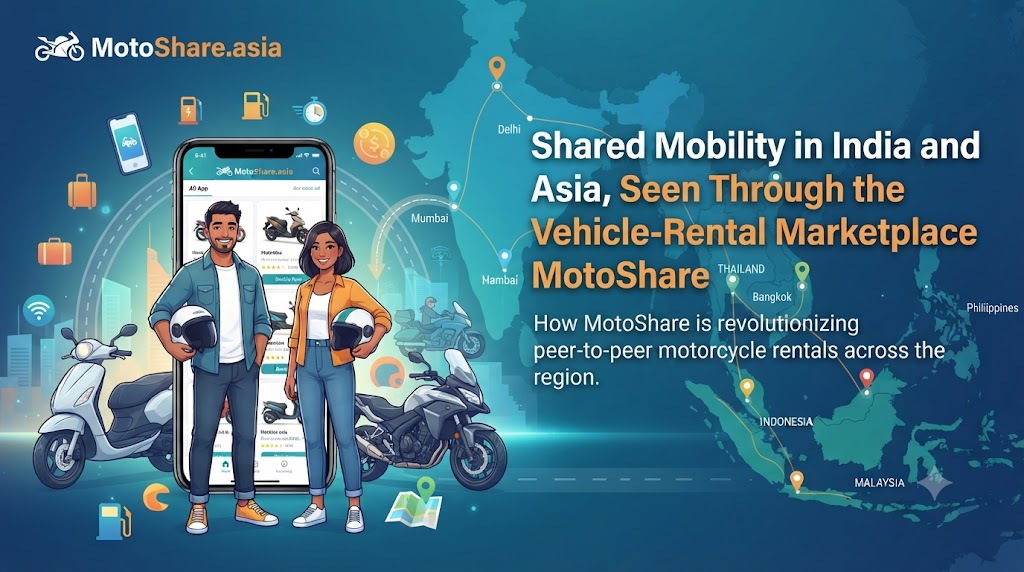
MotoShare is described as a vehicle-rental marketplace. It connects people who need a vehicle with local rental providers. A traveller can search by city, look at different vehicle types, choose how long to rent and use the booking options provided. The description also mentions verified local providers and opportunities across India and other Asian destinations.
The idea behind this is simple. Instead of each person buying a vehicle that will sit unused for most of the week, a pool of vehicles can serve many people over time. Providers list what they have, and renters pick what they need. The platform makes the meeting point easier.
The details of any platform can change. Listings, prices and terms are not fixed, so confirm the current information with the platform and the provider before you pay.
What Access Offers That Ownership Often Cannot
Owning a vehicle brings costs that arrive whether you ride or not: servicing, insurance, parking, repairs and the loss in value over time. For a person who travels only now and then, these costs can be hard to justify.
Access changes the maths. You pay for the days you actually use a vehicle. You can choose a scooter for a busy week in a town, then a car for a family trip later. If your plans change, you are not tied to a vehicle that no longer fits.
Access also lowers the barrier for people who cannot make a large purchase at once. A student on a short project or a young professional in a new city can get around without a big upfront payment.
Renting is not a perfect answer. If you need a vehicle every day for years, owning may cost less. In a compact area with good public transport, you may not need a vehicle at all. Shared access works best when your need is occasional, short-term or uncertain.
Understanding Shared Rentals From Search to Return
Starting a Search the Simple Way
Most rental searches begin with four choices: city, dates, vehicle type and duration. People who rent a bike online usually find that these four choices narrow a long list to a few suitable options. If you are travelling in a busy season, booking early gives you more choice.
Nearby Options and Local Providers
A search for bike rental near me shows options close to where you are. This matters for convenience, but it also means that many of the providers are likely to be local operators. Ask for the pickup address, the return address and the times that suit both sides. A clear agreement on these points helps the renter and the provider avoid confusion.
Choosing a Vehicle for the Job, Not for Show
The best rental vehicle is the one that fits the trip.
- Scooters: Light and easy to handle in crowded areas. Scooter rental in India is a common choice for short local journeys.
- Commuter motorcycles: A better fit for longer rides and varied road surfaces.
- Premium bikes: More powerful and comfortable, but with larger deposits and stricter rules.
- Adventure bikes: Made for long and rough routes, and best for experienced riders.
- Cars: Useful for groups, luggage and wet weather.
- Bicycles: A low-cost choice for short, slow rides.
A self drive bike rental means that you alone are responsible for the vehicle. Pick one that suits your skill and the roads, not the one that looks the most impressive.
Matching Rental Length to Real Need
A short rental of a few hours or a day is about convenience. A longer rental of weeks or months is about reliability, servicing and fair pricing over time. Some providers may offer lower daily rates for longer periods, but this varies, so ask.
For longer rentals, ask who handles servicing, how breakdowns are managed and whether you can extend the rental if your plans change.
Terms That Protect Both Renter and Provider
Clear terms protect both sides. Before you confirm a rental, check each of these items and ask for answers in writing if anything is unclear:
- Total cost, including taxes and any extra charges
- Deposit, with the amount and the refund timing
- Insurance, with the coverage, the exclusions and your share of any damage cost
- Licence requirements for the vehicle class and for visitors from abroad
- Mileage rules and the fee for going over the limit
- Fuel policy at pickup and return
- Cancellation terms and deadlines
- Vehicle condition, including tyres, brakes, lights and visible marks
Digital Search and Its Limits
Online search makes information easier to reach. A renter can compare vehicles and terms from home, without travelling from shop to shop. It also helps people in smaller towns or unfamiliar cities find options they might not have known about.
There are limits. Listings can differ in the amount of detail they give, and not every feature is available everywhere. Use the payment methods supported by the platform or provider, keep your receipts and never share an OTP or PIN with anyone.
Who Gains From Shared Rentals
- Students can get around for a short project, a placement or a trip without buying a vehicle. Deposit size and total cost matter most for them.
- Commuters who rent for a few weeks can compare the total with public transport or cabs, and ask about servicing and breakdown support.
- Tourists gain freedom to explore at their own pace. Pickup location, fuel rules and safety gear matter most.
- Professionals can use rentals for site visits or client meetings, with clear paperwork and receipts.
Coastal and Metro Examples: Goa and Bangalore
Goa has beaches and small towns that sit close to each other, so many visitors look for bike rental in Goa to move around at their own pace. A scooter handles most coastal roads. Check the weather, parking rules and helmet requirements, and plan ahead for busy periods.
Bangalore, also known as Bengaluru, is a large city with heavy traffic. People who search for bike rental in Bangalore often need to travel to offices, classes or meetings, or to take weekend trips outside the city. A scooter or lighter motorcycle usually copes better with city streets, while a car suits longer drives.
In both places, the method is the same. The best vehicle depends on the road and the purpose of the trip.
When a Shared Car Is the Right Choice
A car is useful for families, groups, luggage and wet weather. Readers who explore self drive car rental India options usually want privacy and control over their route. Since you are driving, read the insurance terms carefully and know what you would pay if there is damage.
Car rental in India can also help groups who split the cost of a trip. Ask about tolls, parking, late-return fees and whether you may take the car into another state.
Regional Marketplaces and Shared Mobility Across Asia
Asia has dense cities, coastal roads, mountain routes and many travellers who prefer two wheels. This is part of the reason why motorcycle rental Asia attracts steady interest. A regional marketplace offers one familiar way to search across destinations and can make smaller local providers easier to find.
The steps stay the same wherever you go: search, compare, read the terms and confirm. Licence rules, insurance and permitted routes vary by country, so check local requirements before you travel.
Using Rentals Responsibly
Access comes with responsibility. A shared vehicle will be used by other people after you, so treat it with care.
- Wear a helmet every time you ride and keep to the speed limits.
- Return the vehicle on time, in the condition you received it, with the fuel level the terms require.
- Park considerately and avoid blocking roads or entrances.
- Choose a vehicle that suits the number of people and the distance, since a bigger vehicle than needed uses more fuel.
- Never drive or ride after drinking alcohol.
Renting does not automatically make travel greener. Choosing a simpler vehicle, sharing a car with others and combining trips are practical ways to use less fuel.
Five Steps to a Fair and Safe Rental
This is general guidance and not a description of any specific MotoShare process.
- Choose the destination and dates. Decide where you will collect and return the vehicle.
- Check availability. Shortlist two or three vehicles that fit your need and skill.
- Compare prices and terms. Look at the deposit, fuel rule, distance limit and cancellation terms along with the rate.
- Review the required documents. Confirm the licence, ID and payment method the provider accepts.
- Confirm the booking. Save the details, the receipt and the provider’s contact number.
Missteps That Cost Renters and Providers
- Ignoring the deposit. Know the amount and the refund timeline.
- Overlooking insurance terms. Ask what is not covered.
- Skipping the vehicle check. Photograph the vehicle at pickup so that any earlier damage is on record.
- Forgetting the return rules. A late return or a different drop-off point may cost extra.
- Paying outside official channels. This leaves both sides with little protection if a problem appears.
- Assuming all vehicles are equally suitable. A vehicle that is wrong for the road can be unsafe and uncomfortable.
A Hypothetical Student Journey
Farah is a postgraduate student who will spend two weeks on a field project near Bhubaneswar. She assumes suitable listings are available. She needs to travel each day between her accommodation and a survey site, and she does not want to buy a vehicle for such a short period.
She compares a basic scooter and daily cabs. She also looks at a longer rental rate and a smaller deposit. She reads the terms and sees that the scooter has a distance limit that fits her route, and that the fuel rule requires the same level at return.
She chooses the scooter, asks the provider to explain the deposit and the insurance, photographs the vehicle, wears a helmet and saves the confirmation. Her decision came from her real need, her budget and the terms, not from the lowest daily rate.
Community Questions Answered
Is renting really better than owning for students?
It can be, especially for short projects or when budgets are tight. For daily use over many years, owning may cost less.
Does renting from local providers help small businesses?
It can. Many rental providers are small, local operators, so renting through a marketplace may bring them more customers. The details depend on the provider.
Can friends share the cost of a rented vehicle?
Yes, sharing a car or splitting the cost can reduce the expense for each person. Every driver or rider must hold a valid licence, and the rental terms should allow it.
How can I rent responsibly?
Choose a vehicle that fits your needs, follow the rules of the road, wear a helmet, park considerately and return the vehicle on time and in good condition.
What if I cannot afford a large deposit?
Compare deposit amounts across listings, consider a simpler vehicle and ask the provider about options. Do not agree to pay through unofficial routes just to avoid a deposit.
How can I check that a provider is reliable?
Look for a clear pickup address, contact details and written terms. MotoShare’s description mentions verified local providers, but you should still confirm the current details before you book.
What should I do when the rental ends?
Return the vehicle on time and at the agreed place, take photos, ask for a receipt and confirm when the deposit will be refunded.
Conclusion
Shared rentals work best when both renters and providers treat them as a partnership: the provider offers a vehicle with clear terms, and the renter uses it with care and returns it as agreed. For students, young workers, families and travellers, this kind of access can be more practical than ownership, as long as the choice fits the trip, the terms are read before payment and the vehicle is handled responsibly. MotoShare is one platform where people can browse motorcycles, scooters, cars and bicycles across Indian cities and other Asian destinations, and the same habits of clear questions, fair dealing and safe riding apply on any platform you choose.

