
Introduction
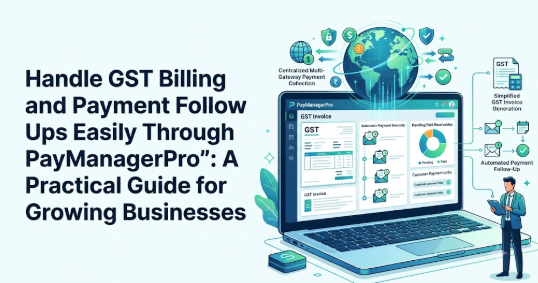
Revenue generation is only half the battle in modern enterprise management—the real challenge lies in working capital velocity. Across industries, finance departments remain tethered to disjointed operational stacks: generating invoices in one system, distributing balance reminders via another, and checking half a dozen payment processor portals just to confirm a single settlement. This structural fragmentation creates crippling administrative friction, inflates Days Sales Outstanding (DSO), and leaves accounting teams buried in manual spreadsheet cross-referencing. To restore control over cash flow, forward-looking companies are stepping away from siloed tools. Operational hubs like PayManagerPro address these core bottlenecks by merging invoice generation, multi-gateway tracking, customer follow-ups, and ledger reconciliation into a single, synchronized workflow.
What is PayManagerPro?
PayManagerPro is a unified financial workflow platform engineered to streamline the entire invoice-to-cash lifecycle for B2B and B2C organizations. Rather than acting as a standalone bank or an isolated payment gateway, it serves as an orchestration layer that sits between your business systems, payment processors, and client touchpoints.
Why It Was Developed
Businesses rarely fail due to a lack of sales; they fail due to poor cash flow management. The platform was created to tackle the fundamental operational delay between delivering a service and receiving clear, reconciled funds. By removing manual data transfer between billing modules and payment collection points, it eliminates the operational lag in revenue recognition.
Who Uses It
PayManagerPro is designed for organizations that process recurring or high-volume invoices and deal with multiple collection routes. Typical users include:
- Finance Leaders & CFOs: Seeking clear visibility into cash flow, aging receivables, and settlement timings.
- Accounts Receivable (AR) Specialist Teams: Looking to minimize manual spreadsheet entries and speed up daily reconciliation.
- Operations Managers: Aiming to unify payment experiences across diverse service channels.
- Growing Mid-Market Enterprises: Needing structured, compliant invoicing without investing in enterprise-level custom software development.
Key Features of PayManagerPro
Centralizing accounts receivable requires specific functional capabilities. Here is how key modules within PayManagerPro support modern payment workflows:
GST Invoice Management
- What it does: Generates structured, tax-compliant electronic invoices formatted for regional compliance standards (including GST structures).
- Why businesses need it: Non-compliant tax invoices lead to audit risks, delayed input tax credits for clients, and administrative re-work.
- Practical benefit: Enables automated tax calculation and standardized billing templates, ensuring that every sent invoice meets statutory standards right from the start.
Payment Link Management
- What it does: Generates dynamic, invoice-bound payment links and QR codes that can be shared instantly through email, messaging applications, or direct portals.
- Why businesses need it: Clients often delay payments simply because logging into a portal or manually adding bank details takes too much effort.
- Practical benefit: Shortens the payment cycle by providing customers with a direct, one-click transition from invoice review to final settlement.
Invoice Payment Tracking
- What it does: Provides live visibility into invoice statuses—categorizing them clear-cut as draft, issued, viewed, partially paid, fully settled, or overdue.
- Why businesses need it: Without real-time tracking, collections teams spend unnecessary time following up on invoices that have already been paid or opening inquiries on unread bills.
- Practical benefit: Empowers finance teams to launch targeted collection actions based on actual customer interactions.
Automated Payment Reconciliation
- What it does: Automatically matches incoming gateway payouts and direct settlements with corresponding open invoices in the database.
- Why businesses need it: Manual line-by-line reconciliation of bank statements against open ledger accounts takes up valuable hours and is prone to human error.
- Practical benefit: Minimizes manual entry work, lowers settlement errors, and keeps balance sheets updated in real time.
Multi-Gateway Payment Dashboard
- What it does: Aggregates transactions across multiple payment processors into a single unified management dashboard.
- Why businesses need it: Relying on a single processor can lead to downtime risks or limited payment choices for clients. However, running multiple gateways typically fragments financial data.
- Practical benefit: Gives finance teams a bird’s-eye view of all incoming transactions, success rates, and processor performance without requiring logins to separate admin portals.
Accounts Receivable Automation
- What it does: Schedules automated payment reminders, late payment notifications, and structured collections workflows based on defined invoice due dates.
- Why businesses need it: Manual follow-up calls and emails are time-consuming and often executed inconsistently.
- Practical benefit: Maintains steady, polite payment communications with clients, steadily lowering average Days Sales Outstanding (DSO).
Invoice-to-Cash Automation
- What it does: Connects the complete sequence from initial quote conversion and invoice generation down to transaction settlement and ledger balancing.
- Why businesses need it: Hand-offs between sales operations, billing teams, and accounting staff often introduce data discrepancies and operational friction.
- Practical benefit: Accelerates total working capital availability by minimizing time spent at every step of the receivables pipeline.
How Businesses Can Use PayManagerPro: Step-by-Step
Implementing a centralized approach to receivables does not require complicated operational overhauls. A typical workflow using PayManagerPro looks like this:
- Invoice Creation: The finance or operations team generates a compliant invoice using standard, pre-configured billing items and tax rules.
- Link Distribution: The system creates a secure, dedicated payment link tied directly to the unique invoice balance and delivers it through the client’s preferred channel.
- Real-Time Monitoring: As the customer opens and reviews the invoice, status updates reflect in the central management dashboard.
- Automated Reminders: If a payment approaches its due date without completion, scheduled follow-up notifications gently prompt the payer.
- Collection & Settlement: The customer completes the transaction using their choice of payment method via the integrated gateway options.
- Reconciliation & Reporting: Incoming funds are matched against open balance items automatically, updating receivables records and generating clear financial reports for management review.
Real Business Use Cases
1. Digital Marketing Agency
- Business Challenge: A growing digital marketing agency relies on recurring retainer billing. Because client managers handle client interactions while the finance team handles invoicing, payment links were frequently distributed manually via email threads. This disconnect resulted in overdue balances and unclear tracking.
- How PayManagerPro Helps: The agency consolidates invoice generation and dynamic link creation directly within one hub, setting up automated billing schedules for ongoing client retainers.
- Practical Outcome: Timely payment notifications go out automatically, reducing late payments and saving account managers from chasing outstanding invoices.
2. Corporate Training Consultancy
- Business Challenge: A corporate training firm conducts customized workshops for corporate clients. Billing usually involves split payments—a deposit before the session and a final balance after completion. Tracking these partial payments across spreadsheets created constant reconciliation errors.
- How PayManagerPro Helps: The finance team uses payment tracking capabilities to manage partial settlements against parent invoices, applying incoming payments directly to single records.
- Practical Outcome: Full visibility into remaining balances ensures final payments are collected on time before final training assets are delivered.
3. Equipment Manufacturer
- Business Challenge: A regional machinery components supplier issues GST-compliant tax invoices alongside physical shipments. High transaction values mean clients often request multiple payment options across different banking gateways, making settlement updates messy and disorganized.
- How PayManagerPro Helps: Utilizing multi-gateway aggregation alongside compliant invoice generation allows the manufacturer to offer clients flexible payment channels while maintaining a single, unified settlement dashboard.
- Practical Outcome: Settlement visibility improves significantly, reducing the manual effort needed to confirm incoming bank transfers before releasing orders.
4. Professional Educational Institute
- Business Challenge: An executive learning institute handles hundreds of course fee payments every month across credit cards, bank transfers, and digital wallets. Matching unidentified bank deposits to specific student accounts created major administrative delays during enrollment windows.
- How PayManagerPro Helps: Unique invoice-bound links and automated reconciliation routines match incoming payments directly to individual student identification numbers.
- Practical Outcome: Enrollment processing moves much faster, eliminate manual payment verification calls, and ensure accurate fee records.
5. B2B Software Provider
- Business Challenge: A mid-sized software service provider experienced rising Days Sales Outstanding (DSO) values because accounts receivable tasks relied on manual spreadsheets and ad-hoc email reminders.
- How PayManagerPro Helps: The company implements structured accounts receivable automation, triggering systematic payment reminders prior to and immediately following invoice due dates.
- Practical Outcome: Cash collection timelines improve steadily, helping the finance team focus on broader strategic planning rather than routine collections.
Common Payment Management Mistakes Businesses Make
Even well-established companies frequently fall into preventable financial administration traps. Recognizing these patterns is the first step toward building resilient operational practices.
- Relying on Fragmented Spreadsheets: Using manual logbooks to track multi-channel payment statuses inevitably introduces human error, leading to duplicate collection entries or missed follow-ups.
- Neglecting Proactive Reminders: Waiting until an invoice is weeks past due before reaching out increases credit loss risk. Consistent, automated pre-due-date reminders secure payments far more reliably.
- Separating Invoicing from Payment Gateways: Sending an invoice via document file while providing separate bank transfer details forces the payer to handle data entry manually, introducing unnecessary payment delays.
- Delayed Ledger Reconciliation: Postponing reconciliation to month-end turns minor ledger discrepancies into complex, time-consuming investigations.
- Single Gateway Dependency: relying on a single processing pathway leaves businesses exposed to sudden gateway outages or restricted payment options for clients.
- Ignoring Receivables Analytics: Failing to monitor aging metrics prevents leadership from identifying underlying collection issues early.
Centralizing financial tools through platforms like PayManagerPro helps businesses replace these reactive habits with structured, automated workflows.
Strategic Comparison & Overview
Table 1: PayManagerPro Features and Their Business Benefits
| Feature | Business Benefit | Suitable For |
| GST Invoice Management | Ensures tax compliance, reduces manual entry errors, and standardizes billing structures. | Businesses operating under complex tax frameworks needing statutory compliance. |
| Multi-Gateway Payment Dashboard | Consolidates settlement data from various processors into one interface for complete visibility. | Multi-channel merchants and mid-market enterprises using multiple payment gateways. |
| Automated Payment Reconciliation | Matches incoming transactions with open invoices automatically, eliminating ledger entry delays. | Organizations handling high transaction volumes with dedicated accounting teams. |
| Accounts Receivable Automation | Schedules polite, systematic payment follow-ups to steadily lower Days Sales Outstanding (DSO). | Service providers, B2B agencies, and SaaS businesses managing recurring balances. |
Table 2: Common Payment Management Challenges vs. Better Practices
| Challenge | Business Impact | Better Practice |
| Manual Data Matching | High risk of human error, slow month-end closes, and lost administrative hours. | Implement unified accounts receivable platforms with real-time settlement matching. |
| Disconnected Collection Channels | Fragmented client payment experiences leading to payment delays and uncollected fees. | Provide dynamic, invoice-linked payment options directly within billing notices. |
| Ad-Hoc Collections Communications | Irregular client follow-ups, higher default rates, and unpredictable cash flow. | Deploy automated, schedule-driven payment reminders tied to real-time invoice statuses. |
| Siloed Gateway Data | Lack of real-time visibility into overall collection balances and processing metrics. | Aggregate processing channels into a single management interface. |
Example 1: Streamlining Agency Client Accounts
A commercial design agency managed roughly 80 active client accounts on varying billing structures. Project managers generated invoices through localized billing tools, but direct payment verification depended entirely on weekly bank statement reviews conducted by the agency’s primary founder.
Because there was no real-time link between project milestones and payment confirmations, design deliverables were occasionally delivered before initial retainer deposits actually cleared. Furthermore, clients frequently claimed they missed billing emails, forcing account managers to re-send invoices manually.
By transitioning to an integrated platform structure like PayManagerPro, the agency consolidated invoice generation and dynamic link generation. Automated notification rules alerted account managers the moment an invoice was opened and paid. This immediate visibility eliminated awkward follow-up conversations and gave management an accurate, up-to-the-minute view of cash flow.
Example 2: Unifying Multi-Branch Manufacturing Collections
A regional manufacturer supplying construction components operated three distribution offices. Each facility maintained its own preferred localized payment processing gateway to accommodate regional buyer habits. However, central accounting struggled to reconcile incoming payments against open account ledgers because transaction records were scattered across three separate administrator accounts.
Month-end accounting regularly required several days of tedious spreadsheet reconciliation. Unidentified payments frequently sat in holding accounts while staff worked to match bank deposits with pending customer balance orders.
By adopting a multi-gateway payment dashboard approach through PayManagerPro, all regional distribution points were linked back to a single balance management interface. incoming transactions were automatically mapped directly to pending order numbers, regardless of which payment processor cleared the funds. Month-end reconciliation time dropped from days to hours, giving finance executives clear visibility into overall corporate working capital.
Core Benefits of Utilizing PayManagerPro
Adopting a unified invoice and payment platform provides immediate, practical advantages for growing enterprises:
- Clear Financial Visibility: Consolidates balance records, pending collections, and completed settlements into one comprehensive dashboard.
- Accelerated Cash Flow: Reduces payment friction by combining compliant invoices directly with instant payment links.
- Minimized Operational Overhead: Eliminates manual data entry and spreadsheet cross-referencing for routine daily reconciliation.
- Consistently Compliant Invoicing: Supports accurate tax calculations and standardized billing structures across all issued invoices.
- Improved Customer Experience: Offers clients clear billing information and flexible, secure payment options.
- Structured Receivables Collection: Maintains consistent, polite payment follow-ups through automated communication schedules.
Frequently Asked Questions
What makes PayManagerPro different from a standard payment gateway?
A payment gateway simply processes online credit card or bank transfer transactions. PayManagerPro works as a higher-level management layer—combining tax-compliant invoicing, multi-gateway consolidation, receivable follow-ups, dynamic link creation, and reconciliation into a single platform.
Can PayManagerPro manage multiple payment processors simultaneously?
Yes. It aggregates transaction data from different processing services into a unified multi-gateway dashboard, eliminating the need to log into multiple administrative systems to view collections.
How does dynamic payment link creation speed up collections?
Instead of forcing clients to log into a separate portal or manually input bank routing numbers, a dynamic link takes them directly to a pre-filled, secure payment page linked to their specific open balance.
Is PayManagerPro suitable for businesses with regional GST compliance needs?
Yes. The platform includes GST invoice management capabilities, helping organizations generate compliant billing documentation complete with structured tax breakdowns.
How does automated payment reconciliation operate?
The platform automatically matches incoming settlements cleared through integrated gateways against open customer invoice balances, updating ledger records without requiring line-by-line manual spreadsheet entry.
Can automated payment reminders be customized for different client groups?
Yes. Collection workflows allow teams to configure timing, messaging style, and trigger events for payment notices based on customer category, agreement terms, or invoice size.
Does centralized receivables tracking help reduce DSO (Days Sales Outstanding)?
By pairing automated pre-due-date reminders with easy one-click payment links, businesses significantly reduce common friction points that delay payment, leading to a steady, measurable decrease in DSO.
Is PayManagerPro built for B2B or B2C operation models?
It supports both. B2B firms benefit from detailed GST invoicing, structured reconciliation, and formal accounts receivable automation, while B2C operations leverage fast payment links and multi-gateway processing options.
Moving Toward Efficient Financial Operations
Managing business receivables should not depend on disconnected spreadsheets, manual bank checks, or reactive payment follow-ups. As order volumes grow and client payment choices multiply, relying on manual processes introduces unnecessary errors, operational delays, and working capital constraints.
Conclusion
Sustaining healthy business growth requires an accounts receivable model built on precision rather than manual effort. When financial management relies on fragmented tools and reactive collection tactics, administrative overhead inevitably surges while cash flow predictability declines. Consolidating your billing ecosystem, gateway pipelines, and reconciliation schedules through PayManagerPro eliminates operational friction at every touchpoint of the invoice-to-cash cycle. By replacing administrative drag with structured automation, organizations protect their working capital and empower finance teams to shift away from chasing payments and focus on strategic expansion. Evaluating your existing receivable touchpoints today is the clearest path toward establishing a modern, resilient financial operation.

