
Introduction
Getting data from a source database into an analytics dashboard sounds simple. In reality, it is messy. Schema changes break pipelines, missing values corrupt reports, and data engineers spend half their time fixing broken code instead of building new features.
When data breaks, business decisions get delayed, and trust in the data team plummets.
DataOps solves this problem by bringing order, speed, and automated quality checks to data pipelines. This guide explains what DataOps is, why traditional data management fails, and how data engineering teams can implement DataOps to deliver clean, trusted data consistently.
What Is DataOps?
DataOps is an automated, process-oriented methodology used by data engineering and analytics teams to improve the quality, speed, and collaboration of data delivery.
Think of a traditional data pipeline as a manufacturing assembly line where workers inspect cars only after they roll off the line. If a wheel falls off, everyone has to stop and figure out what went wrong. DataOps is like installing automated sensors at every single station of that assembly line. If a bolt is loose, the machine stops instantly, fixes the problem, or alerts the team before a faulty car is shipped.
Why Does It Matter?
Without DataOps, data pipelines are fragile. A single upstream change—like a marketing team renaming a column from user_id to customer_id—can silently break downstream finance dashboards. DataOps ensures that changes are tested automatically, so errors are caught before they reach decision-makers.
How DataOps Works
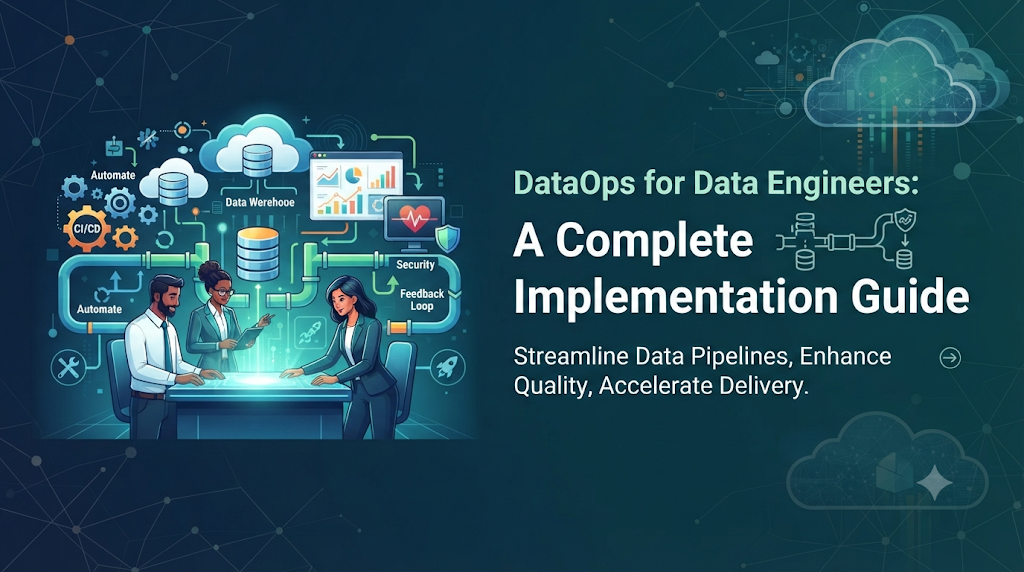
DataOps transforms how data moves through an organization by connecting three main pillars: People, Process, and Technology.
- Version Control: All data pipeline code, transformations, and queries are stored in systems like Git. This lets teams track who made changes and roll back mistakes instantly.
- CI/CD (Continuous Integration and Continuous Deployment): Code changes are tested automatically in a staging environment before being pushed to production.
- Automated Data Testing: Pipelines run automated checks (data assertions) to ensure incoming data meets expected rules (e.g., “This column must never contain negative numbers”).
- Monitoring and Observability: Teams monitor data health in real-time, receiving alerts if data volume drops unexpectedly or pipeline latency spikes.
Why Traditional Data Pipelines Fail
To understand why DataOps is necessary, look at how data teams traditionally operated:
- Siloed Teams: Data engineers build pipelines, data scientists build models, and business analysts build dashboards, rarely talking to each other.
- Manual Testing: Quality checks rely on someone manually running a query to see if numbers look right.
- No Rollback Plan: When a pipeline fails in production, engineers scramble to patch it directly in the live environment, often creating new bugs.
- Lack of Visibility: No one knows a report is wrong until an executive spots a glaring discrepancy during a board meeting.
Key Components of a DataOps Architecture
A successful DataOps setup relies on several interacting layers:
- Orchestration Layer: Tools like Apache Airflow or Prefect that schedule and manage the order in which data tasks run.
- Transformation Layer: Tools like dbt (data build tool) that allow engineers to write modular, testable SQL transformations.
- Testing and Observability: Tools that monitor data freshness, schema drift, and data distribution anomalies.
- Infrastructure as Code (IaC): Managing cloud data warehouses and servers using code templates rather than manual dashboard clicks.
Practical Example: The Silent Data Break
Imagine an e-commerce company tracking daily sales.
- Without DataOps: The third-party payment gateway updates its API, changing the timestamp format. The data pipeline continues to run, but it loads all transaction dates as
Null. The daily revenue report shows $0. Executives panic, thinking sales crashed. It takes the team six hours to trace the bug back to the API change. - With DataOps: An automated schema test runs the moment the pipeline triggers. It detects that the incoming timestamp format does not match the expected schema. The pipeline halts automatically, sends an alert to the on-call engineer’s Slack channel, and prevents corrupted data from reaching the dashboard. The engineer fixes the mapping in minutes.
Common Mistakes in DataOps Adoption
1. Buying Tools Before Changing Culture
- What people do: Purchase expensive DataOps monitoring software and expect it to fix broken processes automatically.
- Why it fails: Tools only highlight problems; they do not fix bad collaboration habits.
- What to do instead: Start by defining workflows, peer-review processes, and testing standards before selecting software.
2. Testing Everything at the Very End
- What people do: Write data tests only after the data has landed in the final data warehouse.
- Why it fails: Fixing data issues late in the pipeline is costly and time-consuming.
- What to do instead: Shift testing left. Validate data at the source and at every transformation step.
3. Ignoring Documentation
- What people do: Build complex pipelines without keeping data lineage documentation updated.
- Why it fails: When pipelines break, no one knows which downstream reports depend on the failing table.
- What to do instead: Use tools that automatically generate data lineage graphs as part of the deployment process.
Risks and Limitations
- Initial Slowdown: Implementing CI/CD and automated testing requires upfront time investment. Teams may feel slower during the first few weeks.
- Alert Fatigue: If data tests are written poorly, engineers will receive hundreds of false-positive alerts every day, causing them to ignore real warnings.
- Complexity Overhead: For very small startups with a single data table, full DataOps may introduce unnecessary overhead.
DataOps Decision Framework
Use this step-by-step framework to evaluate when and how to introduce DataOps practices:
- Assess Pain Points: Are your data pipelines breaking weekly? Do stakeholders frequently find errors in reports before your team does?
- Start with Version Control: Move all SQL scripts and pipeline code into Git repositories with mandatory peer reviews (pull requests).
- Automate Core Tests: Add basic assertions (e.g., uniqueness checks on primary keys, not-null checks on critical columns).
- Implement CI/CD: Set up automated tests that run whenever someone pushes new code.
- Add Observability: Deploy monitoring tools to track pipeline runtime, data volume, and freshness.
Checklist for Data Engineering Teams
Before deploying a new data pipeline to production, verify the following:
- All pipeline code is stored in version control with peer review.
- Automated tests check for schema changes and null values.
- Primary keys are tested for uniqueness.
- Downstream dependencies and data lineage are mapped.
- Monitoring alerts are configured for pipeline failures or unusual data volume drops.
- A rollback plan is documented in case the deployment fails.
Key Terms
- CI/CD: Continuous Integration and Continuous Deployment; the practice of automating code testing and releasing.
- Data Lineage: A map showing the origin of data and all the places it travels through in a pipeline.
- Data Assertion: A rule or condition checked automatically against data (e.g., “Age must be greater than zero”).
- Schema Drift: An unexpected change in the structure of data, such as a missing column or changed data type.
- Orchestration: Managing the order, schedule, and dependencies of data tasks.
- Data Observability: The ability to fully understand the health and quality of data across systems.
- Idempotency: A property where running a data pipeline multiple times produces the exact same result without duplicating data.
- Staging Environment: A replica of the production environment used for testing code safely before release.
Frequently Asked Questions
What is the difference between DevOps and DataOps?
DevOps focuses on automating software application development and IT infrastructure. DataOps applies those same automation and testing principles specifically to data pipelines, analytics, and data warehouse management.
Do small teams need DataOps?
While small teams may not need complex enterprise tooling, adopting basic DataOps principles—like version control and automated testing—prevents small data errors from turning into major business crises as the company grows.
What tools are commonly used in DataOps?
Common tools include Git for version control, Apache Airflow or Prefect for orchestration, dbt for transformations, and tools like Great Expectations or Monte Carlo for data testing and observability.
How does DataOps improve data quality?
By running automated checks continuously rather than relying on manual audits, DataOps catches corrupted data, missing values, and schema changes instantly.
Is DataOps only for data engineers?
No. While data engineers build the pipelines, DataOps relies on collaboration between data engineers, data analysts, data scientists, and business stakeholders.
Conclusion
DataOps transforms data engineering from a reactive firefighting role into a reliable engineering discipline. By combining version control, automated testing, and continuous monitoring, data teams can catch errors early, ship pipelines faster, and deliver data that the business can trust. Start small by adding version control and basic data assertions, then scale your automation as your data operations grow.

