
Introduction
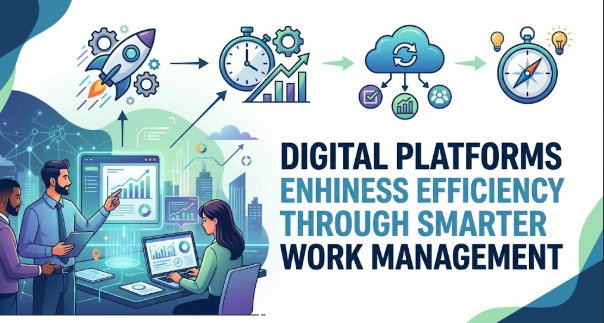
Many businesses start with simple tools, manual follow-ups, spreadsheets, phone calls, and scattered messages. In the beginning, this may feel manageable, but as customers, payments, staff, projects, orders, and data increase, slow systems begin to create confusion. A missed invoice, delayed customer response, wrong inventory entry, or unclear approval can affect cash flow, customer trust, and daily productivity. This is why understanding How Digital Platforms Help Businesses Work Faster and Smarter matters for beginners. A digital platform is not just software; it is a structured way to connect people, processes, data, and decisions in one organized system. Beginners often feel confused because there are many tools for accounting, CRM, automation, project management, marketing, payments, HR, and reporting. Choosing without understanding can lead to wasted money, poor setup, security risks, and weak adoption. This blog explains digital platforms in a practical way so business owners, employees, students, finance learners, and small teams can understand what to use, why to use it, how to avoid mistakes, and how to build smarter work habits without depending on guesswork or quick decisions.
What is Digital Platforms ?
A digital platform is an online or software-based system that helps people complete work, share information, track activities, manage customers, process payments, store data, and make better decisions. In simple words, it brings important business activities into one organized place instead of spreading them across paper files, WhatsApp messages, emails, spreadsheets, and memory.
For example, a small business may use one platform to manage sales leads, another to send invoices, another to track employee tasks, and another to review reports. When these tools are connected properly, the business can reduce delays and errors. This is where digital transformation for business becomes practical, not just technical.
People search for this topic because they want to save time, reduce manual effort, improve teamwork, manage customers better, and avoid operational mistakes. Digital platforms are used in finance, accounting, customer support, online selling, HR, GST and tax record keeping, marketing, project delivery, training, and reporting.
A beginner-friendly example is a service company using a cloud-based business tool to manage customer inquiries. Instead of checking multiple phones and emails, every inquiry enters one system, gets assigned to the right person, and can be tracked until closure.
A common misunderstanding is that digital platforms automatically solve all business problems. They do not. They only work well when the process is clear, users are trained, data is clean, and responsibilities are defined. The practical takeaway is simple: choose platforms based on real business needs, not because a tool looks popular.
Why Digital Platforms Are Important
Digital platforms are important because they directly affect speed, accuracy, cost control, customer experience, and decision-making. When work is manual, people often spend more time searching for information than solving problems. A digital platform reduces this by creating one reliable system for tasks, records, reports, and communication.
For savings, digital platforms help reduce repeated work and avoid unnecessary costs caused by mistakes. For borrowing and finance, accounting platforms and dashboards help businesses understand cash flow before taking loans. For investing or expansion decisions, data-driven reports help owners compare performance instead of relying only on assumptions. For trading, crypto, or high-risk online financial activity, secure platforms and proper record keeping help users track transactions and avoid careless decisions. For tax planning, digital records make documentation more organized. For casino or affiliate content businesses, digital platforms can help manage content quality, compliance-sensitive language, and responsible publishing workflows.
A practical scenario is a small business owner who wants to hire more staff. Without digital records, they may not know whether revenue, expenses, and workload support expansion. With proper dashboards, task reports, and accounting records, they can review the decision more carefully.
The common mistake is treating digital tools as an expense instead of a business system. The better approach is to connect platform use with clear goals such as faster billing, better customer response, cleaner records, stronger team accountability, and safer data handling.
The Real Problem Readers Face With Digital Platforms
The real problem is not only lack of tools. The bigger issue is lack of clarity. Many businesses already use apps, spreadsheets, payment tools, email, and messaging platforms, but these tools are not connected to a clear process. As a result, work still feels slow and confusing.
Beginners often face too much online advice. One person says use a CRM, another says use automation, another says use AI, and another says build a custom platform. Without knowing the business problem, this advice can create more confusion. Emotional decision-making also plays a role. Business owners may buy tools because competitors are using them or because a sales demo looks impressive.
Poor planning creates another problem. Teams may not define who will use the platform, what data must be entered, how reports will be reviewed, and how mistakes will be corrected. Weak comparison is also common. Many users compare only price and ignore security, support, integrations, scalability, training, and hidden costs.
Unrealistic expectations can also damage results. A digital platform cannot fix unclear roles, poor discipline, bad customer service, or weak financial planning by itself. Ignoring risk, not reading terms and conditions, depending only on social media advice, and not knowing the next step are common reasons businesses fail to get value from digital platforms.
The better approach is to start with the business problem first. Ask what is slow, what is repeated, what causes errors, what affects customers, what affects money, and what needs better visibility. Then choose the platform.
How Digital Platforms Work Step by Step
Step 1: Identify the Business Problem Clearly
The first step is to understand what problem the digital platform should solve. This means checking where work is slow, where errors happen, where customers face delays, and where teams lose time. It matters because buying software without a clear problem often leads to wasted money. A business can apply this by listing daily pain points such as delayed invoices, missed leads, poor follow-ups, unclear task ownership, or weak reporting. For example, if a sales team forgets customer follow-ups, a CRM may help. The common mistake is choosing a platform because it is popular. The better approach is to define the problem first, then search for a tool that solves that specific problem.
Step 2: Map the Existing Workflow
The second step is to map how work currently happens from start to finish. This includes who receives the request, who approves it, who completes the task, who checks quality, and who updates the customer. It matters because digital platforms improve workflows only when the workflow is understood. Beginners can apply this by writing the process in simple steps before selecting software. For example, an order process may include inquiry, quotation, approval, payment, delivery, invoice, and feedback. The common mistake is digitizing a broken process without improving it. The better approach is to simplify the process before moving it into a platform.
Step 3: Choose the Right Platform Type
The third step is selecting the right platform category. Some businesses need accounting software, while others need workflow management platforms, customer experience platforms, project management tools, HR systems, or enterprise collaboration software. It matters because the wrong platform may create more work instead of reducing it. Beginners can apply this by matching the tool type with the main need. For example, a service business with many customer inquiries may need a CRM before advanced analytics. The common mistake is buying an all-in-one tool without knowing whether the team can use it. The better approach is to start with the most urgent business need and expand gradually.
Step 4: Organize Data Before Migration
The fourth step is cleaning and organizing existing data before adding it to the platform. This includes customer names, phone numbers, invoices, product lists, employee records, vendor details, and financial entries. It matters because poor data creates poor results. If the platform receives duplicate, outdated, or wrong information, reports will also be wrong. A beginner can apply this by removing duplicate records, checking spelling, standardizing formats, and deciding what data is actually needed. For example, before moving customers into a CRM, update phone numbers and email IDs. The common mistake is uploading messy spreadsheets directly. The better approach is to clean data first and migrate carefully.
Step 5: Train Users and Define Responsibilities
The fifth step is making sure team members know how to use the platform and what they are responsible for. It matters because even the best tool fails if users do not enter data correctly or avoid using the system. Beginners can apply this by creating simple rules such as who updates leads, who closes tasks, who approves invoices, and who reviews reports. For example, a sales executive should know when to update lead status and what notes to add. The common mistake is assuming people will learn automatically. The better approach is to provide basic training, written instructions, and regular checks.
Step 6: Automate Repeated Tasks Carefully
The sixth step is using business process automation for repeated activities such as reminders, approvals, invoice alerts, lead assignment, payment follow-ups, and report generation. It matters because automation saves time and reduces dependency on memory. Beginners can apply this by starting with small automations that are easy to monitor. For example, a platform can automatically remind a customer about pending payment. The common mistake is automating too many things before testing. The better approach is to automate simple, low-risk tasks first and review results before adding complex automation.
Step 7: Review Reports and Improve Continuously
The seventh step is using reports to check whether the platform is actually improving work. It matters because digital platforms should support data-driven decision-making, not just store information. Beginners can apply this by reviewing weekly or monthly reports on sales, tasks, payments, support tickets, project delays, or customer response times. For example, if reports show repeated delay in approvals, the approval process should be improved. The common mistake is collecting data but never reviewing it. The better approach is to create a fixed review habit and use reports for practical improvement.
Key Factors That Influence Digital Platform Success
Business Need
The most important factor is the actual business need. A platform should solve a real problem such as slow billing, weak communication, poor tracking, repeated errors, or delayed customer support. The mistake is buying tools without identifying the need. The better approach is to connect each platform feature with a business outcome.
Ease of Use
A platform should be simple enough for the team to use consistently. If the system is too complex, people may return to old habits. Ease of use matters because adoption decides success. The mistake is choosing feature-heavy software that users avoid. The better approach is to balance features with usability.
Integration
Integration means the platform can connect with other tools such as accounting software, payment gateways, CRM, email, HR systems, or reporting dashboards. It matters because disconnected systems create duplicate work. The mistake is ignoring integration during selection. The better approach is to check current and future integration needs.
Security and Data Privacy
Digital platforms often store sensitive business, customer, employee, and financial data. Security matters because data leaks can damage trust and create legal or financial risk. The mistake is using weak passwords or unknown tools without checking privacy controls. The better approach is to use strong access controls, backups, and trusted platforms.
Cost and Value
Cost is not only subscription price. It may include setup, training, migration, customization, support, integrations, and maintenance. The mistake is choosing the cheapest option without checking long-term value. The better approach is to compare total cost with expected operational improvement.
Scalability
A platform should support future growth. A business may start with 5 users but later need 50 users, more data, more workflows, and better reporting. The mistake is choosing a tool that cannot grow. The better approach is to select a platform that fits current needs and reasonable future expansion.
Support and Training
Good support helps solve technical and usage problems quickly. Training helps teams use features correctly. The mistake is ignoring support quality until something goes wrong. The better approach is to check support channels, documentation, onboarding help, and user learning resources.
Reporting and Analytics
Reports help businesses understand performance, delays, revenue, expenses, customer behavior, and team output. The mistake is using platforms only for data entry. The better approach is to review reports regularly and connect them with business decisions.
Detailed Breakdown of How Digital Platforms Help Businesses Work Faster and Smarter
Digital Platforms Improve Workflow Clarity
A clear workflow tells everyone what needs to be done, who owns the task, and what the next step is. Digital platforms improve workflow clarity by turning informal instructions into trackable actions. This helps reduce confusion, repeated follow-ups, and missed responsibilities. For example, a project management platform can show task owners, deadlines, status, and comments in one place.
The common mistake is expecting a platform to create discipline without process rules. The better approach is to define workflow stages first, then use the platform to manage them.
Digital Platforms Reduce Manual Work
Manual work takes time and increases the chance of human error. Digital platforms reduce manual work through templates, auto-reminders, saved customer records, recurring invoices, approval flows, and task assignment. This is one of the strongest benefits of business process automation.
For example, instead of creating every invoice from scratch, an accounting platform can use stored customer and service details. The mistake is automating without checking accuracy. The better approach is to test automation on a small process before using it widely.
Digital Platforms Improve Team Collaboration
Enterprise collaboration software helps teams communicate, share files, discuss tasks, and track updates without losing information in long message chains. This is useful for remote teams, sales teams, support teams, finance teams, and project teams.
The mistake is using too many communication channels without rules. The better approach is to define where tasks are assigned, where approvals happen, and where final records are stored.
Digital Platforms Support Better Customer Experience
Customer experience platforms help businesses track inquiries, complaints, service requests, feedback, and purchase history. When customer data is organized, teams can respond faster and more accurately.
For example, if a customer calls about a previous order, the support team can quickly check the history instead of asking the same questions again. The mistake is collecting customer data but not updating it. The better approach is to keep customer records clean and use them responsibly.
Digital Platforms Help With Financial Control
Digital platforms can support accounting, billing, expense tracking, payment reminders, cash flow review, GST or tax record preparation, and financial reporting. This helps businesses understand money movement more clearly.
The mistake is treating finance platforms only as data-entry tools. The better approach is to review reports, reconcile records, check unpaid invoices, and use financial data before making borrowing or expansion decisions.
Digital Platforms Improve Data-Driven Decision-Making
Data-driven decision-making means using facts, records, and reports instead of only assumptions. Digital platforms provide dashboards that show sales trends, customer issues, project delays, employee workload, and financial activity.
The mistake is trusting reports without checking data quality. The better approach is to maintain clean data and review reports with practical business context.
Digital Platforms Improve Risk Management
Platforms can reduce risk by improving documentation, access control, approval tracking, audit trails, backups, and compliance records. This is useful for finance, tax, HR, legal, and customer service activities.
The mistake is ignoring permissions and giving everyone full access. The better approach is to provide role-based access so users only see and change what they need.
Common Mistakes Beginners Make With Digital Platforms
Following Random Advice
Beginners often follow advice from social media, friends, or tool advertisements without checking their own business needs. This is risky because every business has different workflows, budgets, customers, and team skills. What works for one company may not work for another. The better approach is to compare advice with your own goals, process, budget, and risk level.
Ignoring Risk
Many users focus only on features and ignore security, privacy, data backup, user access, and compliance risks. This can lead to data loss, misuse, or confusion during audits. The better approach is to check security settings, permissions, backup options, and privacy terms before using a platform for sensitive work.
Not Comparing Options
Choosing the first platform you see can lead to high costs or poor fit. Without comparison, you may miss better features, simpler pricing, stronger support, or better integration. The better approach is to shortlist a few platforms and compare them based on need, usability, cost, support, and scalability.
Trusting Fake Productivity Claims
Some tools may make broad claims about saving time or increasing performance, but results depend on implementation. The risk is expecting automatic improvement without training and process discipline. The better approach is to set realistic goals and measure improvement step by step.
Ignoring Hidden Charges
Hidden costs may include setup, migration, extra users, storage, integrations, premium support, or customization. This can affect cash flow, especially for small businesses. The better approach is to review complete pricing and ask what is included before subscribing.
Making Emotional Decisions
Business owners may buy tools because they feel pressure to modernize quickly. Emotional decisions can result in poor selection and low adoption. The better approach is to take time, test the platform, involve users, and decide based on practical value.
Sharing Sensitive Information Carelessly
Uploading customer, employee, tax, or financial data into unknown platforms can be risky. The better approach is to check platform credibility, privacy controls, access permissions, and data handling terms before storing sensitive information.
Ignoring Legal, Tax, or Compliance Responsibilities
Digital records can support compliance, but they do not replace professional responsibility. Wrong entries, missing documents, or incorrect reporting can still create problems. The better approach is to consult qualified professionals where financial, tax, or legal matters are involved.
Don’t Do This Checklist
- Do not buy a platform only because it is trending.
- Do not upload messy data without checking it.
- Do not ignore security settings and user permissions.
- Do not give all users full access.
- Do not skip training.
- Do not depend only on social media advice.
- Do not ignore pricing terms and renewal charges.
- Do not automate critical work without testing.
- Do not store sensitive data in unknown tools.
- Do not expect software to fix unclear business processes automatically.
Practical Real-Life Examples of Digital Platforms
Example 1: Salaried Professional Managing Side Business Tasks
A salaried person running a small side business may manage orders through messages and payments through manual notes. The challenge is missed follow-ups and unclear income tracking. A better action is to use a simple order tracker, payment record system, and reminder tool. The learning is that even small businesses need organized digital records.
Example 2: Small Business Owner Improving Customer Follow-Ups
A small business owner may receive leads from phone calls, website forms, and social media but forget to follow up on time. The better action is to use a CRM that records every inquiry and assigns follow-up dates. The learning is that customer trust improves when communication is timely and trackable.
Example 3: Finance Team Reducing Invoice Errors
A finance team may create invoices manually and make repeated spelling, tax, or amount mistakes. The better action is to use accounting software with saved customer details, product lists, tax fields, and approval checks. The learning is that digital platforms improve accuracy when data is maintained properly.
Example 4: Startup Team Managing Projects Remotely
A startup team may work from different locations and lose task updates in chat messages. The better action is to use a workflow management platform with task owners, deadlines, comments, and file sharing. The learning is that remote work needs structured visibility, not only communication.
Example 5: Content Business Improving Publishing Quality
A finance or casino content creator may publish articles without review, disclosure checks, or responsible language. The better action is to use content planning, review checklists, and approval workflows. The learning is that digital platforms can support trust, quality, and compliance-sensitive publishing.
Table 1: Digital Platform Area and Business Benefit
| Platform Area | What It Helps With | Practical Business Benefit |
|---|---|---|
| CRM Platform | Leads, customers, follow-ups, support | Faster response and better customer tracking |
| Accounting Platform | Invoices, expenses, payments, reports | Cleaner financial records and better cash flow review |
| Project Management Platform | Tasks, deadlines, ownership, progress | Improved accountability and fewer missed tasks |
| Collaboration Platform | Team messages, files, discussions | Better teamwork and less scattered communication |
| Analytics Dashboard | Reports, trends, performance data | Stronger data-driven decision-making |
| Automation Platform | Repeated tasks and reminders | Less manual work and fewer delays |
Table 2: Beginner Mistake vs Better Approach
| Beginner Mistake | Why It Creates Problems | Better Approach |
|---|---|---|
| Choosing tools without clear goals | The platform may not solve the real problem | Define the business issue first |
| Ignoring training | Users may avoid or misuse the platform | Train users with simple process rules |
| Uploading messy data | Reports and workflows become unreliable | Clean and standardize data before migration |
| Ignoring security | Sensitive data may be exposed or misused | Use permissions, strong passwords, and backups |
| Automating too quickly | Wrong automation can repeat errors | Start small, test, and review results |
| Comparing only price | Cheap tools may lack support or scalability | Compare value, features, support, and fit |
Tools, Methods, and Frameworks Readers Can Use
Workflow Mapping
Workflow mapping means writing each step of a business process from start to finish. It helps beginners see where delays, errors, and repeated work happen. Businesses can use it before choosing a platform so they do not digitize confusion. This method helps avoid the mistake of buying tools without understanding the process.
CRM Checklist
A CRM checklist helps businesses review lead sources, customer details, follow-up stages, sales notes, and support history. It helps teams respond faster and avoid missed opportunities. Beginners can use it by defining what information must be entered for every lead. This helps avoid poor customer tracking.
Digital Adoption Plan
A digital adoption plan explains how users will learn and use the platform. It includes training, responsibilities, support, and review timelines. It helps because platform success depends on daily usage. This avoids the mistake of assuming employees will automatically change habits.
Data Cleaning Sheet
A data cleaning sheet helps remove duplicate, outdated, or incomplete records before migration. Beginners can use it for customer lists, product data, vendor records, and employee details. It helps avoid wrong reports and platform confusion.
Automation Review Method
This method checks which tasks are safe and useful to automate. Beginners can list repeated tasks, check risk level, test automation, and review results. It helps avoid the mistake of automating complex or sensitive activities too early.
Monthly Platform Review
A monthly review checks whether the platform is improving speed, accuracy, customer service, and reporting. It helps businesses identify what is working and what needs improvement. This avoids the mistake of paying for tools without measuring value.
Expert Tips to Make Better Decisions
- Start with the business problem. This matters because software should solve a real issue, not create extra work. Apply it by listing your top three operational problems before comparing tools.
- Keep the first setup simple. A simple setup is easier for beginners and teams to adopt. Apply it by using only essential features first and adding advanced features later.
- Compare total cost, not only monthly price. Setup, training, migration, and support can affect the real cost. Apply it by asking for complete pricing before making a decision.
- Protect customer and financial data. Data privacy matters because businesses are trusted with sensitive information. Apply it by using strong passwords, role-based access, and reliable platforms.
- Train every user properly. A platform works only when people use it correctly. Apply it by creating short internal guides and giving practical demonstrations.
- Clean data before adding it to the platform. Clean data improves reports and reduces confusion. Apply it by removing duplicates and checking important fields before upload.
- Automate gradually. Automation is useful but can repeat mistakes if rules are wrong. Apply it by testing one process at a time.
- Review reports regularly. Reports help convert data into decisions. Apply it by scheduling weekly or monthly business reviews.
- Avoid copying competitors blindly. Your business may have different needs, budget, and team size. Apply it by choosing tools based on your workflow.
- Check integration options early. Integrations reduce duplicate work between systems. Apply it by checking whether the platform connects with your accounting, payment, CRM, or email tools.
- Keep emergency manual backup plans. Technology can fail temporarily. Apply it by keeping export options, backups, and basic manual continuity steps.
- Use professional advice when needed. Tax, legal, financial, and compliance decisions need expertise. Apply it by consulting qualified professionals before major decisions.
Case Studies: How Better Understanding Changes Decisions
Case Study 1: Small Retail Business
Profile: A small retail business with five employees.
Situation: The owner managed orders, payments, and inventory using notebooks and messages.
Problem: Stock updates were delayed, customers received wrong availability information, and payment tracking was weak.
Wrong approach: The owner first considered buying an expensive enterprise system without mapping the process.
Better approach: The business started with inventory tracking, digital invoicing, and simple customer records.
Result or learning: The team reduced confusion because everyone could check updated records.
Key takeaway: Small businesses should start with practical needs before adopting complex platforms.
Case Study 2: Service Agency
Profile: A service agency handling website, marketing, and support projects.
Situation: Team members used email, chat, and spreadsheets for task updates.
Problem: Deadlines were missed because ownership was unclear.
Wrong approach: The agency blamed employees without checking the workflow.
Better approach: It used a workflow management platform with task owners, due dates, status updates, and weekly reviews.
Result or learning: The team gained better visibility and reduced repeated follow-ups.
Key takeaway: Digital platforms work best when responsibilities are clearly defined.
Case Study 3: Finance-Focused Content Publisher
Profile: A finance content publisher creating articles on budgeting, loans, crypto, and casino SEO.
Situation: Content was written and published quickly without a structured review.
Problem: Some articles lacked risk warnings, clear disclaimers, and responsible language.
Wrong approach: The team focused only on keywords and ignored reader trust.
Better approach: It created a content workflow with keyword planning, fact review, risk checks, compliance-sensitive wording, and final approval.
Result or learning: The content became more organized, safer, and more useful for readers.
Key takeaway: Digital platforms can improve content quality when review systems are properly designed.
Risk Awareness: What Readers Must Check First
Data Privacy Risk
Data privacy risk means sensitive customer, employee, business, or financial information may be exposed or misused. It matters because trust can be damaged if data is not protected. Reduce this risk by using trusted platforms, strong passwords, permissions, and privacy reviews.
Cybersecurity Risk
Cybersecurity risk includes hacking, phishing, malware, weak passwords, and unauthorized access. It matters because digital systems can become targets. Reduce this risk with two-factor authentication, secure devices, backups, and user awareness.
Platform Risk
Platform risk means the tool may face downtime, pricing changes, poor support, or limited features. It matters because business operations may depend on that platform. Reduce this risk by checking reliability, export options, support quality, and backup plans.
Financial Risk
Financial risk appears when businesses spend too much on tools without getting enough value. It matters because subscriptions, setup, and integrations affect cash flow. Reduce this risk by comparing total cost and starting with essential features.
Compliance Risk
Compliance risk means business records, tax data, customer data, or industry-specific content may not meet legal or professional expectations. It matters because wrong documentation can create penalties or disputes. Reduce this risk by keeping records accurate and consulting qualified experts.
Misinformation Risk
Misinformation risk happens when businesses rely on random online advice or exaggerated claims. It matters because poor decisions can waste money and time. Reduce this risk by verifying information and testing platforms before full adoption.
Emotional Decision Risk
Emotional decisions happen when users buy tools because of fear, pressure, trends, or competitor activity. It matters because rushed decisions often fail. Reduce this risk by using checklists, comparisons, trials, and clear goals.
Checklist Before Taking Action
- Understand the exact business problem you want to solve.
- Check whether the platform fits your team size and workflow.
- Compare multiple options before choosing.
- Review pricing, renewal charges, user limits, and support terms.
- Check data privacy and security controls.
- Review user permissions and access levels.
- Clean existing data before migration.
- Train users before expecting results.
- Test automation before using it for important tasks.
- Keep emergency funds separate from risky business spending.
- Avoid fake claims about instant productivity or guaranteed growth.
- Review tax, legal, or compliance impact where required.
- Prepare a written implementation plan.
- Avoid emotional decisions based on trends or pressure.
- Consult qualified professionals for financial, tax, legal, or security concerns.
Use this checklist before buying, implementing, or expanding any digital platform. It helps you slow down, compare better, protect data, avoid unnecessary spending, and make decisions based on practical business value.
Strategic Insights for Better Decision-Making
Process First, Platform Second
A digital platform should support a clear process. If the process is unclear, the platform may only make confusion faster. For example, before using a CRM, define lead stages such as new inquiry, contacted, proposal sent, negotiation, closed, or lost.
Automation Should Support Judgment, Not Replace It
Automation is useful for reminders, routing, and repeated updates, but important decisions still need human review. For example, automated payment reminders are helpful, but dispute cases should be checked manually.
Data Quality Decides Report Quality
Reports are only as useful as the data entered into the platform. If records are incomplete or wrong, dashboards may mislead decision-makers. Beginners should create simple data-entry rules.
Team Adoption Is More Important Than Features
A platform with fewer features but strong usage is often better than a powerful platform nobody uses properly. Businesses should involve users early and collect feedback.
Security Must Be Built Into Daily Use
Security is not only an IT issue. Every user affects security through passwords, device safety, data sharing, and access habits. Beginners should create basic security rules from day one.
Integration Reduces Duplicate Work
When tools connect properly, teams do not need to enter the same data multiple times. For example, connecting CRM and accounting systems can reduce repeated customer entry.
Review and Improve Regularly
Digital transformation is not a one-time activity. Businesses should review platform usage, reports, costs, and user problems regularly. Small improvements over time create stronger operational efficiency.
Key Terms Explained for Beginners
- Digital Platform: A software or online system that helps manage business work, data, communication, and decisions in an organized way.
- Digital Transformation: The process of improving business activities using digital tools, better workflows, and data-based decisions.
- Automation: Automation means using software to complete repeated tasks such as reminders, approvals, updates, or reports.
- CRM: CRM stands for Customer Relationship Management. It helps businesses track leads, customers, follow-ups, and communication history.
- Workflow: A workflow is the step-by-step process used to complete a task, such as order handling, approval, billing, or support.
- Cloud-Based Tool: A cloud-based tool works online and can usually be accessed from different devices with proper login access.
- Integration: Integration means connecting different software tools so data can move between them without repeated manual entry.
- Dashboard: A dashboard shows important business information such as sales, tasks, payments, or customer activity in a visual format.
- Data Privacy: Data privacy means protecting personal, customer, employee, and financial information from misuse or exposure.
- User Permission: User permission controls what a person can view, edit, approve, or delete inside a platform.
- Scalability: Scalability means the platform can support business growth, more users, more data, and more workflows.
- Operational Efficiency: Operational efficiency means completing work with less waste, fewer errors, better speed, and better use of resources.
- Audit Trail: An audit trail is a record of who did what, when they did it, and what changed inside a system.
- Data-Driven Decision-Making: This means using reports, records, and facts to make decisions instead of relying only on assumptions.
- Platform Risk: Platform risk means problems that may come from depending on a tool, such as downtime, price changes, poor support, or limited control.
Who Should Read This Blog
- Beginners: This blog helps beginners understand digital platforms without technical confusion.
- Students: Students can learn how modern businesses use technology for operations, finance, and decision-making.
- Salaried Employees: Employees can understand how digital tools improve productivity, reporting, and collaboration at work.
- Small Business Owners: Owners can learn how to reduce manual work, improve customer service, and manage records better.
- New Investors: Investors can understand why platform-driven businesses may operate more efficiently, while still reviewing risks carefully.
- Traders: Traders can learn the importance of secure platforms, data tracking, and avoiding emotional decisions.
- Loan Seekers: Loan seekers can use digital records to understand cash flow, repayment capacity, and financial discipline.
- Crypto Learners: Crypto learners can understand platform risk, data safety, transaction records, and the importance of caution.
- Casino Content Creators: They can use digital platforms to manage content review, responsible language, and affiliate transparency.
- Finance Bloggers: Finance bloggers can use workflow tools to plan, review, and publish more trustworthy content.
- People Improving Money Awareness: Readers can learn how organized systems support better financial planning and safer decisions.
Frequently Asked Questions
1. What is a digital platform in business?
A digital platform is an online or software system that helps manage tasks, data, customers, payments, communication, or reports. It helps businesses reduce scattered work and organize operations. The value depends on correct setup and regular use.
2. Why is How Digital Platforms Help Businesses Work Faster and Smarter important?
How Digital Platforms Help Businesses Work Faster and Smarter is important because businesses need speed, accuracy, and better visibility. Digital platforms can reduce manual work and improve decision-making. They also help teams track responsibilities more clearly.
3. Can small businesses use digital platforms?
Yes, small businesses can use digital platforms for billing, customer follow-ups, task tracking, inventory, payments, and reporting. They should start with simple tools that solve real problems. Expensive or complex systems are not always necessary.
4. What is the biggest mistake beginners make with digital platforms?
The biggest mistake is choosing software before understanding the business problem. This can lead to wasted money and poor adoption. Beginners should define needs, compare tools, and train users before full implementation.
5. How do digital platforms improve productivity?
Digital platforms improve productivity by reducing repeated work, improving communication, assigning tasks clearly, and providing faster access to information. They help teams spend less time searching and more time completing useful work.
6. Are digital platforms safe for financial data?
They can be safe when businesses use trusted platforms, strong passwords, access controls, backups, and privacy settings. However, users should always review security practices. Sensitive financial, tax, and customer data must be handled carefully.
7. How can beginners compare digital platforms?
Beginners should compare platforms based on business need, ease of use, security, integration, support, scalability, and total cost. Price alone is not enough. A low-cost tool can become expensive if it lacks key features or support.
8. Does automation remove the need for employees?
Automation usually reduces repeated manual tasks, but it does not remove the need for human judgment. Employees are still needed for decisions, customer care, review, strategy, and problem-solving. Automation works best when people use it responsibly.
9. How Digital Platforms Help Businesses Work Faster and Smarter in finance?
How Digital Platforms Help Businesses Work Faster and Smarter in finance is mainly through organized invoices, expense tracking, payment reminders, cash flow reports, and cleaner records. These tools support better planning but do not replace qualified financial advice.
10. Should businesses take professional advice before choosing platforms?
Professional advice is useful when platforms involve tax, legal, cybersecurity, financial reporting, or complex integrations. Beginners can start with basic research, but expert guidance helps reduce serious mistakes. This is especially important for sensitive data.
11. How often should businesses review platform performance?
Businesses should review platform performance monthly or quarterly, depending on usage. They should check cost, user adoption, reports, errors, support issues, and business value. Regular review helps avoid paying for tools that are not useful.
12. What is the best next step after reading this blog?
The best next step is to list your current business problems and identify which ones can be improved with digital platforms. Then compare suitable tools, review risks, and start with a small implementation. Avoid rushing into full adoption without planning.
Conclusion
Digital Platforms Help Businesses Work Faster and Smarter is important for any beginner who wants to manage work, money, customers, records, and decisions more responsibly. Digital platforms are not magic solutions, but they can become powerful business systems when used with clear processes, trained users, clean data, and regular review. The main lesson is to begin with the problem, not the software. If invoices are delayed, choose a tool that improves billing and payment tracking. If customers are not followed up on time, choose a CRM. If projects are delayed, use a workflow management platform. If reports are unclear, improve data quality and dashboard review. Businesses should also remember that speed without control can create risk. Automation should be tested, sensitive data should be protected, pricing should be reviewed, and compliance responsibilities should not be ignored. Beginners should avoid fake claims, emotional decisions, and blind copying of competitors. The better path is practical: map the workflow, compare platforms, clean data, train users, automate carefully, and review results. Over time, this approach can improve operational efficiency, customer experience, team accountability, and data-driven decision-making. Whether you are a student, salaried professional, small business owner, finance learner, crypto beginner, content creator, or business decision-maker, digital platform awareness can help you make smarter choices. The goal is not to use more tools; the goal is to build better systems. When technology supports clarity, discipline, and responsible planning, businesses can work faster without becoming careless and smarter without becoming overdependent on software.

