
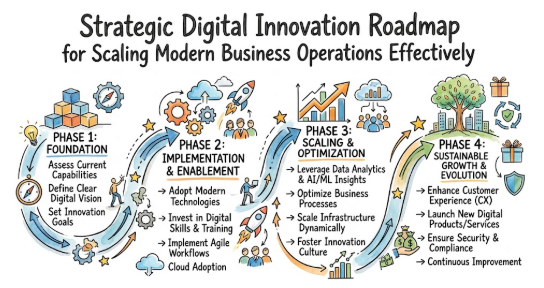
Introduction
Imagine two local retail stores. The first relies on physical ledgers, manual inventory checks, and word-of-mouth marketing. The second utilizes cloud-based inventory tracking, automated customer relationship management (CRM) software, and a data-driven digital storefront. When a sudden market shift occurs—such as a supply chain disruption—the first business struggles to survive, while the second pivots within hours. This is the reality of the modern era.
Digital innovation is not merely about buying expensive software; it is a fundamental shift in how a business creates value for its customers. Whether you are a small business owner or a department lead, understanding this landscape is vital. Digital tools can streamline your finances, enhance your security, and help you reach wider markets. However, the path to innovation is paved with both opportunities and significant risks. This guide will help you navigate that path with confidence, prioritizing sustainable growth over temporary trends.
What Is Digital Innovation?
Digital innovation is the process of using digital technology to improve existing business processes or create entirely new ones. It connects directly to financial health because efficiency gains lead to cost savings and higher profit margins. For instance, transitioning from manual bookkeeping to automated accounting software reduces human error, provides real-time financial reporting, and simplifies tax compliance.
Why This Topic Matters
In a competitive economy, inertia is a risk. Businesses that ignore digital tools often face inflated operational costs, stagnant revenue, and a disconnect from customer needs. Implementing digital solutions allows for better data tracking, which in turn leads to smarter investment decisions and more precise budget planning.
Detailed Breakdown: Core Components
To innovate effectively, focus on these four pillars:
- Process Automation: Using software to handle repetitive tasks like invoicing or inventory tracking.
- Data Analytics: Turning raw sales or customer data into actionable insights for future budgeting.
- Customer Experience (CX): Implementing digital touchpoints like websites or apps that make interaction seamless.
- Cybersecurity: Protecting your financial data and customer information from potential threats.
Step-by-Step Practical Guide
- Assess Current Needs: Identify the biggest bottleneck in your operations.
- Define Clear Objectives: Are you trying to save time, reduce costs, or increase sales?
- Research Scalable Tools: Choose software that can grow with your business.
- Budgeting: Allocate a fixed percentage of your revenue to digital infrastructure.
- Pilot Testing: Apply the new tool to a small portion of your business first.
- Staff Training: Ensure your team understands how to use the new systems.
- Monitor Performance: Review KPIs (Key Performance Indicators) monthly.
- Iterate and Improve: Use the data gathered to refine your processes further.
Practical Real-Life Examples
- Scenario A: A business relies on spreadsheets for payroll. Better Action: Move to cloud-based HR software to automate tax deductions and payroll cycles, reducing the chance of manual payment errors.
- Scenario B: Customer complaints are lost in email. Better Action: Implement a ticketing system to ensure every query is tracked, improving customer retention.
- Scenario C: Spending too much on paper marketing. Better Action: Pivot to targeted social media ads based on existing customer data, optimizing marketing spend.
- Scenario D: Unaware of monthly cash flow. Better Action: Integrate bank APIs with accounting software for real-time tracking of income and expenses.
- Scenario E: Security breach fear. Better Action: Enable multi-factor authentication (MFA) on all financial and operational accounts.
Common Problems Readers Face
- Analysis Paralysis: Spending too much time comparing tools and failing to act.
- Poor Budgeting: Investing in “over-featured” software that the business does not need yet.
- Ignoring Security: Using insecure platforms that expose financial data to fraud.
- Resisting Change: The “we have always done it this way” mentality.
Mistakes to Avoid
- Ignoring Hidden Charges: Always check for transaction fees or subscription escalation clauses.
- Trusting “Magic” Solutions: No software replaces sound financial strategy or hard work.
- Over-reliance on Data: Don’t lose the human touch in customer service.
- Data Neglect: Storing data without backing it up regularly.
Don’t Do This Checklist:
- Don’t share administrator passwords.
- Don’t ignore software updates (security patches).
- Don’t integrate new tech without a contingency plan.
- Don’t use funds meant for emergency reserves for software upgrades.
Table 1: Digital Adoption vs. Traditional Methods
| Feature | Traditional Method | Digital Innovation |
| Data Access | Offline/Physical | Cloud/Anywhere |
| Reporting Speed | Weekly/Monthly | Real-time |
| Error Probability | High (Manual) | Low (Automated) |
| Scalability | Limited | High |
Table 2: Investment Framework
| Tool Type | Primary Benefit | Risk Level |
| Accounting Software | Financial Accuracy | Low |
| CRM Systems | Customer Growth | Low |
| Crypto/Blockchain Payments | Global Reach | High (Volatility) |
| Cloud Infrastructure | Flexibility | Low |
Tools, Methods, or Frameworks
- The PDCA Cycle: Plan, Do, Check, Act. A proven method for implementing digital changes.
- Budgeting Software: Tools that sync with bank feeds to track net cash flow.
- Security Checklist: Password managers, MFA, and offline data backups.
Expert Tips
- Start with the biggest pain point first.
- Prioritize tools that integrate with each other (e.g., your accounting software should talk to your CRM).
- Always keep an offline backup of critical financial records.
- Educate your team on phishing scams.
- Audit your digital subscriptions every quarter to cut unused costs.
- Focus on long-term value over shiny, expensive features.
- Ensure the tool is compliant with local data privacy laws.
- User-friendly interfaces are better than complex, feature-rich ones.
- Monitor your return on investment (ROI) for every software subscription.
- Keep the business strategy separate from the software strategy.
Case Studies
- The Small Retailer: A shop moved from cash registers to POS (Point of Sale) software. Result: Inventory shrinkage dropped by 30% within six months.
- The Service Agency: A firm automated its billing system. Result: Payment follow-up time decreased by 70%, improving cash flow.
- The E-commerce Startup: Used predictive analytics to stock goods. Result: Reduced overhead costs by 20% through better inventory management.
Checklist Before Taking Action
- Validate the necessity of the technology.
- Verify the security certifications of the provider.
- Compare at least three different service providers.
- Read the fine print regarding hidden fees and cancellation terms.
- Review your current repayment capacity for ongoing subscriptions.
- Ensure your emergency fund remains untouched.
- Establish a clear, written plan for implementation.
- Audit the impact on your tax filing and legal compliance.
- Enable security protocols like MFA on all accounts.
- Conduct a trial period before full-scale commitment.
Key Terms Explained
- Cloud Computing: Accessing software and data over the internet rather than on a local computer.
- API: A bridge that allows two different pieces of software to talk to each other.
- CRM: Software that manages interactions with current and potential customers.
- Cyber Hygiene: The practices taken to maintain system health and security.
- Scalability: The ability of a system to handle increased work without failing.
- KPIs: Quantifiable measures used to evaluate success.
- Automation: Using technology to perform tasks with minimal human intervention.
- Data Analytics: Analyzing raw data to make informed business decisions.
- Encryption: The process of converting information into a code to prevent unauthorized access.
- Vendor Lock-in: When a customer is dependent on a vendor for products and services.
Who Should Read This Blog
This guide is essential for small business owners, startup founders, finance managers, freelance consultants, and anyone looking to professionalize their operations through technology.
Frequently Asked Questions
- What is the best way to start digital innovation for modern businesses?
Start by auditing your current workflows and identifying one specific process that wastes time or causes financial errors. - How much should I spend on digital tools?
Aim for a sustainable percentage of your revenue that allows for growth without compromising your emergency financial reserves. - Is digital innovation expensive?
Not necessarily; many powerful tools offer tiered pricing or free versions for small businesses. - How do I protect my business from digital fraud?
Always use multi-factor authentication, keep software updated, and train your staff to recognize common phishing attempts. - Does digital innovation help with tax compliance?
Yes, automated accounting software tracks expenses and income in real-time, making tax filing significantly more accurate. - Can I automate all business decisions?
No; digital tools support decision-making, but strategic choices should always be made by humans. - What if my team is resistant to new tech?
Focus on training and show them how the tool makes their daily tasks easier rather than harder. - How often should I review my digital tools?
A quarterly review is ideal to ensure you are still getting value for your money. - Should I use blockchain for my business?
Only if it solves a specific problem that traditional databases cannot handle; do not use it just because it is a trend. - What is the biggest risk in digital transformation?
The biggest risk is usually data loss or unauthorized access, which is why backups and security are paramount. - How do I choose the right software vendor?
Look for established companies with transparent pricing and good customer support. - Is it too late to start modernizing my business?
No, every small step toward digital efficiency provides a compounding advantage over time.
Conclusion and Next Steps
Digital innovation is not a destination but a continuous process of refinement. By understanding the core tools, managing the associated risks, and maintaining a disciplined approach to your business finances, you can turn technology into your greatest competitive advantage. Start by implementing one tool this month, monitor its performance, and build from there. Focus on long-term sustainability rather than quick fixes.

