
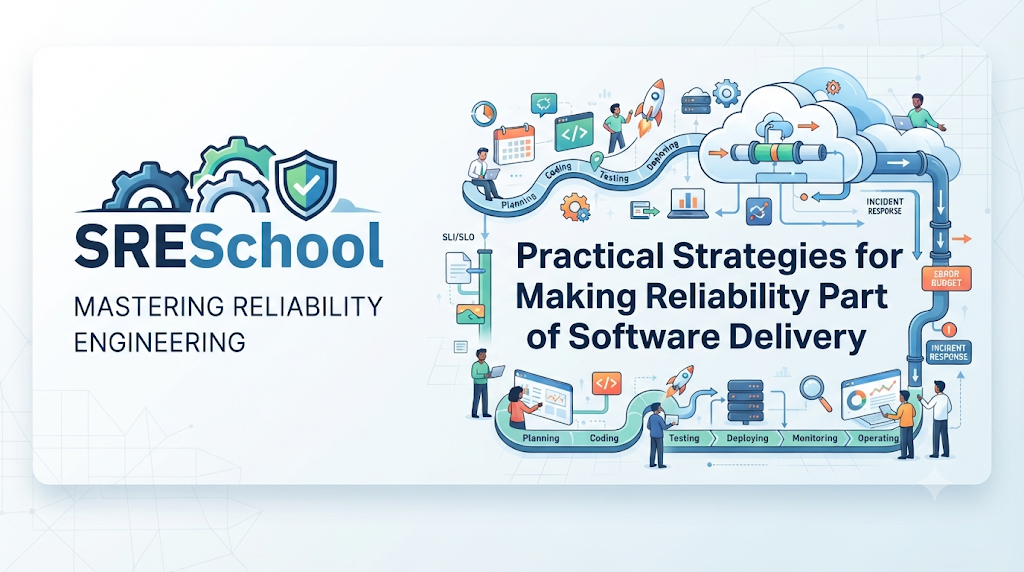
Apps crash and servers fail every single day. When a website goes down, users get angry and businesses lose money fast. Keeping digital tools online takes smart planning and daily care. Modern tech runs on complex cloud networks that demand constant watch. This article explores SRESchool.com. It shows how the platform helps developers and IT teams build stable software using Site Reliability Engineering.
What Is SRESchool.com?
SRESchool.com is a global learning hub. It focuses entirely on Site Reliability Engineering.
The site teaches engineers how to build stable systems. It turns hard tech hurdles into clear lessons.
Core learning areas include:
- SRESchool Training: Practical steps for system health.
- SRESchool Certification: Structured tests for tech pros.
- Site Reliability Engineering Course: Deep guides for cloud staff.
- SRESchool Consulting: Expert help for broken workflows.
- SRESchool as a Service: Ongoing cloud support.
What Is Site Reliability Engineering?
Site Reliability Engineering applies software code to IT tasks.
Old IT teams fixed servers by hand. They waited for crashes and rushed to patch them.
SRE stops that cycle. Engineers write code to block bugs early. They focus on speed and uptime.
Why Uptime Matters
Modern apps use many cloud parts. If one part fails, the whole app stops.
Downtime hurts sales. Users leave slow apps.
Reliability means planning ahead. Teams build apps to survive crashes safely.
SRESchool Training
Good training shows how apps handle heavy user traffic.
Key topics:
- Basics: How code and hardware link.
- Tracking: Watching app health live.
- Outages: Staying calm during bugs.
- Automation: Writing scripts for boring tasks.
Training spots flaws fast.
SRE Certification
An SRE Certification proves tech skills. It covers monitoring and bug fixes.
Tests help guide study. True skill comes from real debugging work.
Site Reliability Engineering Course
A full course covers:
- Basics: Uptime rules.
- Metrics: Setting speed goals.
- Budgets: Balancing features and safety.
- Observability: Using logs to track apps.
- Incidents: Fixing bugs fast.
- Automation: Letting code handle routine fixes.
Certified Site Reliability Engineer
A Certified Site Reliability Engineer measures system speed. They manage error budgets and lead post-incident reviews.
Certification validates these core skills.
SRE Consulting
Smart teams get stuck. Architecture grows complex.
SRE Consulting brings outside experts in. They review setups and build uptime roadmaps.
SRE as a Service
Hiring large teams is tough. SRE as a Service offers an easy path.
Companies partner with experts to manage cloud infrastructure and monitoring tools.
Corporate SRE Training
Every business is unique. Corporate SRE Training customizes lessons for specific team needs.
Teams learn using tools from their daily work.
SRE Tutorials
An SRE Tutorial breaks big topics down. Tutorials help beginners learn one skill at a time.
Small steps build confidence.
Essential SRE Tools
| Tool Category | What It Does | Problem It Solves |
| Metrics | Tracks CPU use. | Stops blind spots. |
| Logging | Records app text. | Finds error lines. |
| Tracing | Follows requests. | Finds slow network spots. |
| Alerting | Sends warnings. | Warns before crashes. |
| Incidents | Organizes shifts. | Stops outage chaos. |
SLIs, SLOs, and Error Budgets
Teams use clear metrics:
- SLI: A direct measure of speed.
- SLO: The target uptime goal.
- Error Budget: Allowed downtime.
If budgets are safe, teams ship features fast. If budgets drop, teams fix bugs.
Monitoring vs. Observability
- Monitoring tells you when things break.
- Observability tells you why.
Data alone is not enough. Teams must read the data well.
Incident Response
When things break, plans stop panic:
- Alert: Spot the bug.
- Triage: Check severity.
- Fix: Apply a patch.
- Review: Write a post-mortem report.
Automation and Toil Reduction
Toil is boring, manual work. SRE uses automation to kill toil.
Scripts handle heavy lifting. Tests keep scripts safe.
Capacity Planning
Traffic spikes happen. Marketing pushes double user counts overnight.
Planning forecasts resource needs using past trends.
Distributed Systems
Apps use many microservices. Networks drop. Servers fail.
Production engineering builds fault tolerance into apps.
Real-World Examples
- Traffic Spike: Caching data fixes slow store pages during sales.
- Alert Fatigue: Adjusting thresholds stops fake night alerts.
The Learning Ecosystem
Learning connects naturally:
- Start with SRE Training.
- Take a Site Reliability Engineering Course.
- Learn SRE Tools.
- Earn an SRE Certification.
- Use SRE Consulting or Corporate SRE Training.
Benefits of Learning SRE
- Deep cloud knowledge.
- Better troubleshooting.
- Calmer incident habits.
- Less manual toil.
Common SRE Mistakes
- Buying tools too early.
- Collecting logs without reading them.
- Setting noisy alerts.
Practical SRE Learning Path
- Learn basics.
- Master metrics.
- Study observability.
- Practice incidents.
- Build automation.
- Explore networks.
- Review post-mortems.
- Get certified.
Who Can Benefit?
- Beginners
- Software Engineers
- DevOps Pros
- Platform Engineers
- Leaders
- Companies
Frequently Asked Questions
What is Site Reliability Engineering?
It uses software code to manage IT operations.
What does SRE training cover?
Metrics, SLOs, error budgets, and alerts.
Why use error budgets?
They balance feature speed and stability.
What is an SLO?
An internal uptime goal.
How does SRE consulting help?
Experts review setups to cut downtime.
What is SRE as a Service?
Outsourced cloud reliability support.
What skills do certified engineers need?
Observability and automation skills.
How do post-mortems help?
They find root causes to stop repeat bugs.
What is toil?
Repetitive manual work.
Can beginners use SRESchool.com?
Yes, tutorials fit all skill levels.
Conclusion
Great software takes smart planning and steady daily care. Modern teams cannot rely on lucky breaks to keep servers alive. By using structured guides from SRESchool.com, engineers gain the exact tools needed to stop crashes, cut boring chores, and deliver smooth digital experiences every single day.

