
Introduction
Moving to the cloud feels like unlocking endless power. Companies can spin up servers, databases, and networks in seconds. But this flexibility comes with a hidden trap: surprise bills at the end of the month.
In the past, buying hardware was slow and deliberate. Finance teams planned budgets years in advance. Today, a single engineer can launch expensive resources with a click. When the invoice arrives, finance teams panic, and technical teams feel micromanaged.
This disconnect happens because cloud technology and traditional finance speak completely different languages. Cloud engineers talk about throughput, latency, and CPU cores. Finance teams talk about capital expenditures, amortization, and variance.
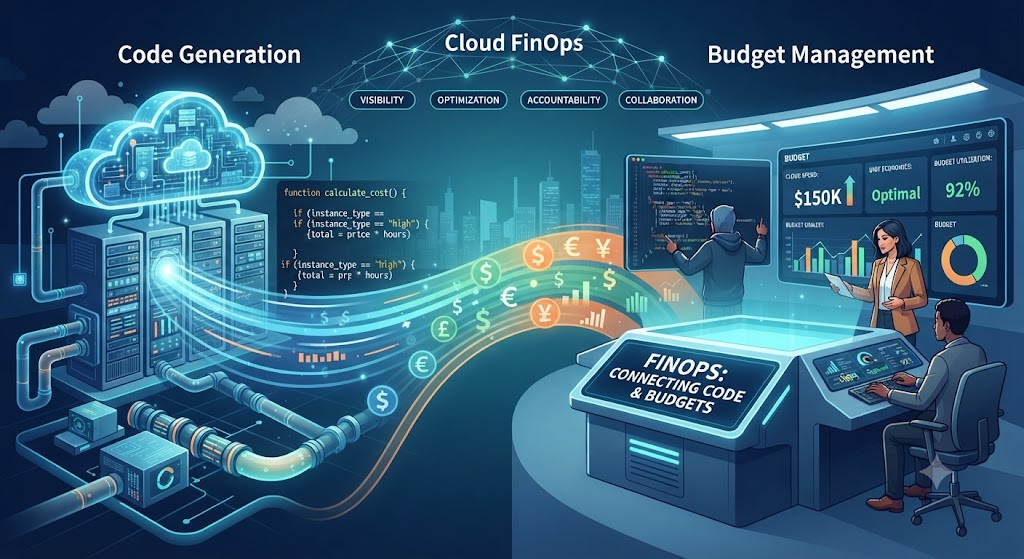
FinOps is the bridge between these two worlds. It is not just about cutting costs; it is about making better business decisions in the cloud. Let us look at why FinOps skills have become mandatory for both cloud and finance professionals.
What Is FinOps?
FinOps stands for Cloud Financial Operations.
- Simple meaning: It is a practice that combines cloud technology and finance to help companies get the maximum business value out of every dollar spent in the cloud.
- Why it matters: Cloud bills are notoriously unpredictable. FinOps creates shared accountability so teams stop guessing and start managing expenses deliberately.
- Example: Instead of finance telling the tech team to cut their budget by 20% blindly, a FinOps team works with engineers to find idle databases that no one is using anymore.
FinOps is rooted in culture as much as technology. It shifts the mindset from “how fast can we build?” to “how efficiently can we grow?”
How FinOps Works
FinOps operates through a continuous lifecycle divided into three main phases: Inform, Optimize, and Operate.
1. Inform
This phase gives everyone visibility into where money is going. Cloud providers like AWS, Azure, and Google Cloud offer detailed usage data, but it is often messy. FinOps professionals organize this data so teams can see exact costs by project, department, or feature.
2. Optimize
Once everyone sees the costs, they look for waste. Engineers resize oversized servers, delete forgotten testing environments, and apply discount models like reserved instances.
3. Operate
This phase turns cost management into a daily habit. Organizations set up real-time alerts, track Key Performance Indicators (KPIs), and align cloud spending with business revenue growth.
Why FinOps Skills Matter for Cloud Teams
Cloud engineers love building scalable systems. Historically, they were rarely judged on how much their architecture cost, as long as it worked. FinOps changes that dynamic.
Understanding the Cost of Architecture
When engineers learn FinOps, they begin to connect technical choices to financial outcomes. They realize that choosing a slightly cheaper database tier or configuring automated shutdowns for non-production environments can save thousands of dollars without hurting performance.
Breaking Down Silos
Engineers often view finance teams as blockers who slow down innovation. With FinOps skills, technical staff can speak the language of finance. They can present business cases for new cloud projects that finance leaders can easily understand and approve.
Why FinOps Skills Matter for Finance Teams
Finance professionals are masters of budgets, forecasts, and audits. But traditional financial tools were built for predictable, fixed assets—like office buildings or physical servers.
Navigating Variable Cloud Pricing
Cloud pricing is dynamic, usage-based, and complex. A static annual budget rarely works when computing needs fluctuate daily. Finance professionals with FinOps skills understand cloud pricing models, discount commitments, and unit economics.
Moving From Copier to Strategic Partner
Instead of acting as the “police” who say no to spending, finance teams trained in FinOps become strategic advisors. They help engineering leaders figure out whether a new cloud feature will generate enough revenue to justify its infrastructure cost.
Real-World Practical Considerations
Adopting FinOps is not a software tool you install; it is a cultural and operational change.
- Daily Collaboration: Companies must hold regular meetings where engineers and finance staff review spending trends together.
- Unit Economics: Mature organizations track costs per customer or transaction (e.g., how much does it cost to process a single user login in the cloud?). This connects technical spending directly to business health.
- Tooling: Teams use specialized FinOps platforms or native cloud dashboards to monitor trends and automate optimization rules.
Common Mistakes
| Common Mistake | Why It Happens | The Problem It Causes | What to Do Instead |
|---|---|---|---|
| Treating FinOps as a cost-cutting exercise | Leadership wants quick savings. | Engineers feel punished and hide resource usage. | Focus on maximizing business value, not just spending less. |
| Leaving finance out of technical design | Teams want to move fast. | Surprise bills arrive after launch. | Involve finance early in architectural discussions. |
| Ignoring the developers | Management tries to manage costs from the top down. | Decisions lack technical context and break apps. | Empower engineers with cost visibility tools. |
Risks and Limitations
- Culture Clash: Engineers and finance teams have very different priorities. Without strong leadership, collaboration can break down into finger-pointing when bills spike.
- Data Overload: Cloud bills generate millions of lines of data. Without proper training, teams get overwhelmed by data and take no action.
- Diminishing Returns: Spending hours trying to optimize a ten-dollar monthly server wastes more in staff time than it saves. FinOps efforts must focus on high-impact areas.
Checklist for Implementing FinOps
- Establish a cross-functional team including members from engineering, finance, and product management.
- Set up clear tagging standards for cloud resources so expenses can be tracked by department or project.
- Review cloud spending trends weekly or monthly rather than waiting for annual audits.
- Educate engineers on basic cloud financial concepts and pricing models.
- Define key performance indicators (KPIs) such as cost per active user or infrastructure cost relative to revenue.
Key Terms
- Cloud Provider: A company that rents out computing power and storage over the internet (e.g., AWS, Microsoft Azure, Google Cloud Platform).
- Reserved Instances: A billing discount commitment where a company agrees to use a specific amount of cloud capacity for one to three years in exchange for lower rates.
- Resource Tagging: Adding labels (like “Project: Marketing” or “Owner: Jane”) to cloud resources to track who is spending what.
- Unit Economics: Measuring financial metrics against business output, such as cloud cost per transaction or per customer.
- Idle Resources: Cloud servers or storage volumes that are running and costing money but are not actually being used.
FAQs
Is FinOps only for large enterprises?
No. While large companies save millions through FinOps, startups and mid-sized companies benefit immensely by preventing runaway cloud bills before they stall business growth.
Do I need to be a programmer to learn FinOps?
No. FinOps sits at the intersection of technology, finance, and business. Professionals with strong analytical, communication, and organizational skills can excel in FinOps regardless of their coding background.
How does FinOps differ from traditional budgeting?
Traditional budgeting relies on fixed, predictable estimates over long periods. FinOps embraces the dynamic, fluctuating nature of cloud usage through continuous monitoring and real-time adjustments.
Who typically leads a FinOps initiative?
Organizations often form dedicated FinOps teams led by a practitioner with a background in either cloud architecture, finance, or operations, working closely with executive sponsors.
Does FinOps mean buying the cheapest cloud resources available?
Not at all. FinOps is about value, not just cheapness. Sometimes spending more on a faster, more reliable cloud service makes financial sense if it improves customer experience and drives revenue.
Conclusion
Cloud technology gives businesses incredible speed, but without financial discipline, that speed can lead to wasted money and fractured internal teams.
FinOps builds a common language between engineers and finance professionals. By combining technical insight with financial clarity, organizations can innovate boldly without fearing their next cloud bill. Whether you write code or manage budgets, understanding FinOps is an invaluable skill for the modern digital economy.

